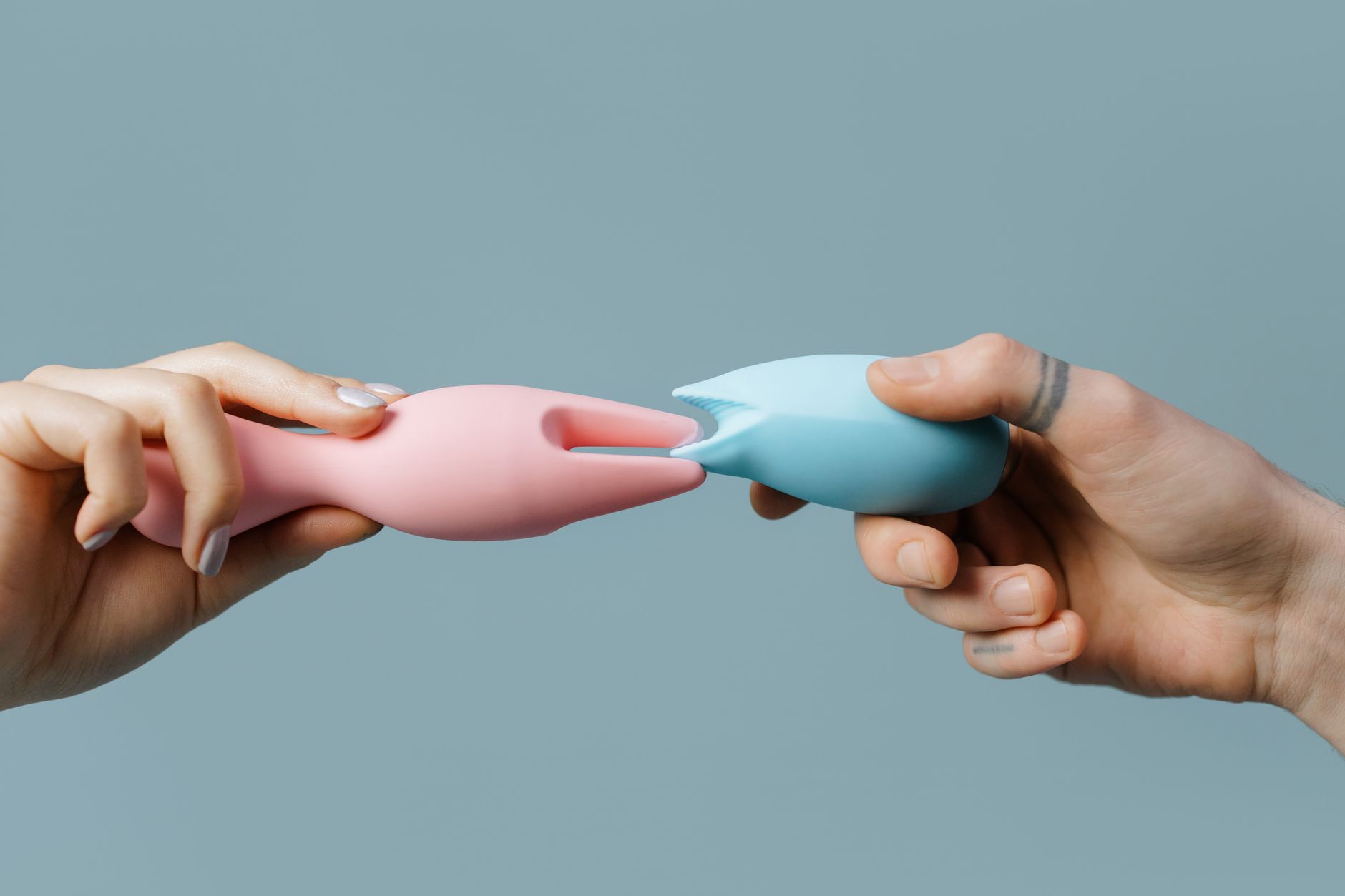
When pleasure stalls, emotional distance is often the culprit
Here's the thing nobody says clearly: you can have a perfectly healthy body, zero medical barriers, and all the right tools, and still not feel pleasure. Why? Because your nervous system isn't actually safe enough to let you feel anything.
Emotional intimacy isn't foreplay. It's the foundation that makes foreplay possible. When that foundation cracks, sex becomes mechanically possible but emotionally empty. And that's not a medical problem. It's a connection problem.
If you've noticed that pleasure has become harder to access even when you want it, or that orgasms feel hollow, or that you're just going through the motions with a partner, emotional distance might be the real issue. And here's what I want you to know: a lemon vibrator can't fix the distance itself, but it can help you start the conversation and rebuild access to your own body again.
The difference between physical and emotional arousal blocks
When emotional intimacy goes missing, arousal doesn't work the way it's supposed to. Your body might be responsive, but your brain is somewhere else entirely. You're scanning for danger instead of settling into sensation. That might show up as difficulty getting wet, trouble reaching orgasm, or that dissociative feeling of watching yourself instead of being present.
This is different from hormonal changes or medical conditions. Those are about what your body can do. Emotional distance is about whether your nervous system believes it's safe enough to let you feel.
The absence of emotional intimacy tells your body a clear message: now is not the time to be vulnerable. Pleasure requires vulnerability. So your body shuts down the access point. That's not a flaw. That's wisdom.
Why a lemon vibrator helps when the real problem is emotional
A lemon clitoral vibrator works in three ways when emotional distance is the issue.
First, it gives you back agency. When intimacy has eroded, sex often becomes something that happens to you, not something you participate in. Using a lemon vibrator on your own terms, at your own pace, reminds your nervous system that you're in control. No performance pressure. No reading a partner's face. Just sensation on your timeline.
Second, it bypasses the thinking brain. Emotional distance usually means you're stuck in your head. A tool like the Lem, with its focused suction stimulation, demands enough attention that it interrupts the loop of worry and analysis. Your nervous system gets a chance to reset.
Third, it builds evidence. When emotional distance has made pleasure feel impossible, proof matters. If you can access sensation and orgasm alone with a lemon vibrator, you know the capacity is still there. The problem isn't your body. That knowledge changes everything about how you move forward.
Starting solo before inviting a partner back in
If emotional intimacy has gone missing with a partner, the worst thing you can do is jump straight back into partnered sex and hope the tools will fix it. They won't.
Instead, spend 2 to 4 weeks rebuilding your own pleasure practice first. Use the lemon vibrator alone, with no goal except sensation. Start with lower intensity settings, maybe pattern 2 or 3. Pay attention to what feels good without rushing to orgasm.
This serves two purposes. It reminds your body what pleasure actually feels like when there's zero relational pressure. And it gives you honest data about what's actually possible for you right now.
Most people find that pleasure returns much faster when they're alone. That's not a sign that your relationship is broken. It's a sign that your nervous system is protecting you from the person who's helped erode safety. That's information you need before you try to rebuild with that person.
The conversation you actually need to have
If you're using a lemon vibrator as a solo practice because emotional intimacy is missing, that usually means a conversation with your partner is overdue.
Here's what doesn't work: "I've been using a vibrator because you don't satisfy me." That's not a conversation. That's a threat. Your partner hears that their role is being replaced.
Here's what actually works: "I've noticed that I've disconnected from my own body and my pleasure. I'm using time alone with a vibrator to rebuild access to that. I want us to reconnect, and I need to feel safe in my own skin first. Can we talk about what's created distance between us?"
That's a vastly different opener. You're naming the real problem (distance, not desire), you're taking ownership of your own healing, and you're explicitly inviting partnership in rebuilding.
If your partner responds with defensiveness or sees the vibrator as a threat, that's important information. It means the emotional work goes deeper than you thought, and you might need help. A couples therapist trained in Gottman Method work (which focuses on repair and reconnection) can change the entire trajectory.
When to use a lemon vibrator together
If you've had the conversation and both of you are actually committed to rebuilding, a lemon vibrator can be part of that process. But the timing matters enormously.
Wait until you've had at least one conversation about what created the distance. Not a fight. A real conversation where you each say what you're sorry for and what you need going forward.
Then, introduce the lemon vibrator slowly. Maybe start by using it while your partner is present but not necessarily involved. You're showing them that pleasure is coming back, and you're not hiding it. That's vulnerability in a different direction.
Only move toward partnered use if it feels genuinely wanted by both of you. If your partner is reluctant or seems to be performing enthusiasm, pause. The tool isn't the issue. The enthusiasm is. You're not going to rebuild intimacy by making someone watch you use a vibrator they're uncomfortable with.
What emotional reconnection actually looks like
Here's what I see when couples successfully rebuild emotional intimacy and pleasure returns: they're not having more sex. They're having sex that actually feels like connection.
You'll notice: eye contact becomes natural instead of effortful. You're more present in your own body. Orgasms feel like something that happens between you, not something you're achieving solo while someone else is there. Pleasure is less about the mechanics and more about the person.
That's the real goal. A lemon vibrator is a tool that helps you get there. But the tool isn't the work. The work is rebuilding trust, naming what went wrong, and both of you deciding that reconnection matters enough to change.
If emotional intimacy is missing, pleasure will stay difficult until it comes back. A vibrator can help you remember what you're capable of. The rest is up to you both.
People also ask
Can using a vibrator alone rebuild emotional intimacy with my partner?
Not directly. A vibrator helps you rebuild connection with your own body and can spark the conversation with your partner about what went wrong. But emotional intimacy is built through vulnerability, honesty, and repair between two people. The vibrator is a tool that removes some of the performance pressure while you do that actual work.
How do I know if the distance I'm feeling is emotional or just physical compatibility?
Physical incompatibility usually shows up as "we want different things sexually." Emotional distance shows up as "I feel like a stranger in my own body when we're together." With emotional distance, you'll find that pleasure is accessible when you're alone but shuts down with your partner. That's your nervous system telling you something needs to be repaired at the emotional level.
If I use a lemon vibrator alone and it helps, does that mean my partner is the problem?
Not necessarily. Your partner might also be struggling with the distance. What it means is that the nervous system relaxes when there's zero relational pressure. You need to find out together whether your partner wants to rebuild that safety or whether the relationship has run its course. A vibrator won't answer that question. Honest conversation will.
How long should I spend rebuilding solo pleasure before involving my partner again?
There's no set timeline. Two to four weeks is a reasonable starting point for most people. But the real marker is this: can you access orgasm reliably on your own? Do you feel curious about pleasure again rather than obligated? If yes, you're ready for the next conversation.
What if my partner gets jealous or threatened by my use of a lemon vibrator?
That response tells you something important about how they view sexuality and whether they can hold space for your pleasure. Some partners need education and reassurance. Others are struggling with their own insecurities that go beyond the vibrator. The vibrator didn't create the jealousy. It just revealed it. That's actually useful information for deciding what comes next.
Can emotional intimacy be rebuilt if we've grown too far apart?
Sometimes. It depends entirely on whether both people are willing to do the work and whether the foundation still exists. Couples therapy with someone trained in reconnection approaches (like the Gottman Method) can help. But you have to both want it. A vibrator won't make someone want to rebuild who isn't ready.
The real work starts with honesty
Emotional intimacy doesn't disappear because of one fight or one mistake. It erodes slowly. Usually it's a combination of things: unmet needs, words left unsaid, small betrayals that pile up, or one person feeling invisible while the other feels criticized.
The work of rebuilding it is slow. It's less exciting than adding new tools to your sex life. But it's the actual foundation that makes anything else possible.
A lemon vibrator can help you remember what pleasure feels like when your nervous system is actually safe. It can help you rebuild agency over your own body. And it can be part of reconnecting with a partner, if you both want that. But it's a tool, not a solution.
The solution is you and your partner deciding together that connection matters more than being right. That you'd rather be vulnerable than distant. That you're willing to have the hard conversations and do the repair work.
That's where pleasure actually comes back from.
References and further reading
If you're working through emotional distance in your relationship, these resources from relationship science can help.
Gottman, J. M., & Silver, N. (2015). The Seven Principles for Making Marriage Work. Harmony.
Perel, E. (2006). Mating in Captivity: Unlocking Desire in Long-Term Relationships. Harper.
Tan, F., & Brown, S. L. (2019). The Physiology of Emotional Intimacy. Current Opinion in Psychology, 29, 77-81.
If you need support with relationship repair, consider working with a therapist trained in emotionally focused therapy or the Gottman Method. What Hello Nansy offers is one piece of the larger conversation. What you need most is honest communication and the willingness to show up for each other.