Let's be real about this
You want solo time with a lemon vibrator. Your partner doesn't know. And you're wondering if that's okay, how to keep it private, and whether you should ever tell them. Here's what I'll say as a relationship therapist who's counseled hundreds of couples: your private pleasure is not a threat to your relationship. It's actually one of the healthiest things you can do for it.
But there's a difference between healthy privacy and hiding something because you're afraid. The first one is about autonomy. The second one erodes trust over time. Understanding which one you're in changes everything.
Why solo pleasure matters, even in a committed relationship
Your body is yours. Your desire is yours. Your orgasm is yours. When you know how your own body works in solitude, you bring better information back to partnered sex. You know what pressure feels good, what speed works, how long warmup takes. You're not guessing. You're not performing. You're not waiting for someone else to figure you out.
This is not selfish. This is resourcefulness.
Most partners, when they eventually learn their person uses a vibrator privately, don't feel betrayed. They feel relieved. Turns out they've been worried they weren't enough, and suddenly they're off the hook for being a walking orgasm machine. The pressure dissolves on both sides.
The storage and access problem
If your partner shares your living space, keeping a lemon vibrator truly secret takes planning. A few practical approaches:
In your own bag or drawer. A locked pouch works if you have a dresser that's understood to be yours alone. A nightstand drawer under a false bottom or a locking box costs fifteen dollars and buys you peace of mind.
At a friend's place. Some people keep toys at a trusted friend's apartment and use them when they have scheduled time alone there. Not ideal long-term, but it works when you're still figuring out what you want from your relationship.
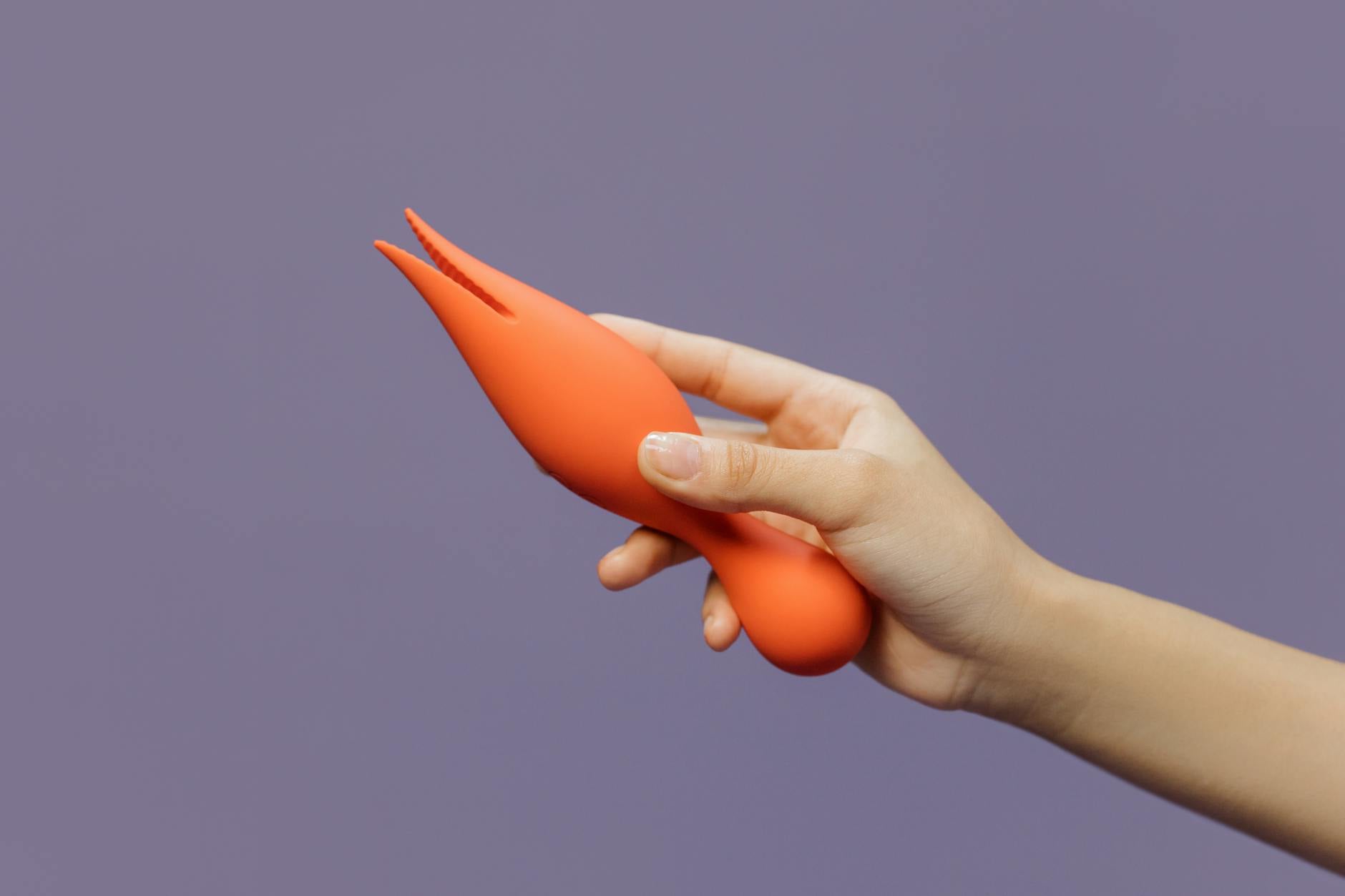
In plain sight as something else. The lemon clitoral vibrator looks enough like a personal massager that it can live in your bathroom drawer alongside actual massage tools. Most partners don't inventory those drawers closely.
The real skill isn't hiding it perfectly. It's normalizing that you have a right to privacy, full stop. A locked drawer isn't suspicious. It's a boundary. Boundaries in healthy relationships aren't accusations. They're just boundaries.
How to actually use it without detection
If your partner is home, timing and location matter. A few solid options:
The shower. Water covers sound. Moisture is already present. You get natural privacy because closed bathroom doors are normal.
When they're sleeping. Early morning or late night, when they're genuinely asleep (not just pretending), is low-stress territory.
When they're out of the house. This is the honest answer. Schedule your own time. "I'm going to take a bath and read" or "I need some solo time this afternoon" are both true and not lying.
During their regular routine. If your partner has a predictable gym class, work call, or friend hangout, that's your window.
The lemon vibrator is quiet compared to older models, which helps. Even so, running water, closed doors, and actual privacy beats muffling sounds while you're half-stressed. That defeats the purpose.
The comfort and technique angle
When you're using a clitoral vibrator alone, you get to skip the performance part entirely. No wondering if you're taking too long. No adjusting your body for someone else's view. No checking in on their comfort. This is the freedom that solo pleasure gives you.
Start with lower intensity patterns and build up. A lemon vibrator on pattern one feels completely different than pattern four, even though it's the same device. Explore all of it. This is your time to learn.
Use lubricant even if you think you don't need it. Water-based lube makes everything glide easier and helps the suction mechanism work better. It's also something you can explain away if someone finds it (skin care, hand care, whatever). No red flags.
Take your time. Twenty minutes, thirty, an hour. There's no clock running. You're not rushing toward anything. That's the actual gift here.
When the conversation might happen naturally
Your partner might find your lemon vibrator. They might ask directly. They might stumble on this article open on your laptop. The conversation doesn't have to be dramatic.
If they find it physically: "Yeah, I use that when I have solo time. It helps me know my own body better. I wanted privacy around it, but I'm glad it came up." That's it. You're not apologizing. You're not over-explaining. You're stating a fact.
If they ask: "Do you use toys?" Yes. Honestly. Not defensive. "I like to explore what feels good when I'm by myself. It doesn't replace partnered sex. It's just different." They get to have feelings about that, but you're not wrong for having done it.
If they're hurt or insecure: that's a separate conversation from "Does this person deserve privacy." The answer to privacy is yes. The answer to insecurity might be reassurance, couples therapy, or a larger conversation about what you both need.
Here's the thing. When you reconnect with pleasure, you often reconnect with your partner too. Solo time isn't the enemy of partnered sex. It's usually the foundation for better partnered sex.
Whether to tell them proactively
If your relationship is solid and communication feels safe, telling them proactively beats being discovered. Something simple: "I've started using a vibrator when I have alone time, and I wanted you to know because honesty matters to me." Done.
If your relationship is shaky, telling them might start a fight about trust or make you feel unsafe. That's different information. In that case, your privacy protects you. And it might be worth thinking about why you don't feel safe being honest. That's the actual problem to solve.
For many people, arousal takes longer as you age, and solo exploration helps you understand that shift. It's not about your partner being less attractive. It's physiology. A lemon vibrator is a tool that meets you where your body actually is, not where it used to be.
The real conversation underneath
Here's what I know as a therapist: the anxiety about a hidden vibrator usually isn't actually about the vibrator. It's about whether you deserve autonomy, whether your pleasure is legitimate, whether your partner will accept you as you actually are.
Those are real questions. They deserve answers. But your solo pleasure isn't the place to solve them. Your solo pleasure is just that. Solo.
If you eventually want to involve your partner in this part of your life, you can. If you don't, you don't have to. The lemon vibrator belongs to you. Your body belongs to you. Your time and your desire belong to you.
Privacy isn't betrayal. It's sovereignty. And that's what actually makes long-term relationships work.
People also ask
Is it normal to use a vibrator while in a relationship?
Completely normal. Research consistently shows that solo toy use happens across all relationship statuses and all demographics. Partnered people use vibrators alone and sometimes together. It's not a sign of a bad relationship. If anything, it's a sign of someone who knows what they want and isn't waiting for someone else to provide it.
Will my partner feel threatened if they find out I use a lemon vibrator?
Maybe. But that's their feeling to process, not your responsibility to prevent through secrecy. Some partners feel relief (pressure off them), some feel curious (want to learn more), and some feel insecure (not about you, about their own fears). The healthiest move is honesty when it feels safe. If it doesn't feel safe, that's information about your relationship that's worth examining separately.
How do I know if I should tell my partner about my vibrator?
Ask yourself: do I trust this person with vulnerabilities? Can I imagine them being curious rather than angry? Would I feel safer with them knowing, or more exposed? If the answers are yes, yes, and safer, then telling them is probably right. If they're no, no, and exposed, then your privacy is protecting you and that's valid.
Can I use a lemon clitoral vibrator if my partner is in the room?
Technically yes, but practically, you probably want privacy. Knowing your own body works best when you're not managing someone else's presence or feelings. That said, some couples eventually use toys together. That's a different conversation for later, when and if you both want it.
Is using a vibrator alone cheating?
No. Cheating involves breaking agreements with a partner. Using a toy alone is solo pleasure. They're completely different categories. Unless you explicitly agreed not to have solo sexual experiences (which would be unusual and worth questioning), you're not breaking anything.
What if my partner finds my lemon vibrator and gets angry?
That's a signal that something larger is happening in your relationship. His anger isn't because the vibrator is actually a problem. It's usually rooted in insecurity, control, or communication breakdown. A couples therapist can help you both work through what's really going on. Your vibrator is just the symbol. The actual issue is underneath.
How do I bring up that I want to use a vibrator privately?
Straightforward and calm. Pick a moment when you're both settled and not rushed. "I've been thinking about exploring my body more on my own time with a vibrator. I wanted to tell you because honesty matters to me." Then listen to what comes up. You might be surprised by how relieved they feel.