
Let's talk about the real objection
Your partner doesn't actually think toys are bad. What they think is that toys mean you want someone (or something) other than them. That's the fear underneath the resistance, and it's worth naming directly instead of tiptoeing around it.
I've worked with dozens of couples where one partner wanted to introduce a lemon vibrator or other clitoral toy, and the other one shut it down. The conversation rarely started with facts. It started with defensiveness. "I'm enough," or "We don't need that," or "It feels weird." Underneath was almost always the same story: "If you need a toy, it means I'm failing."
Here's what changes things. The reframe isn't about convincing them toys are fine. It's about showing them that pleasure isn't a test they can pass or fail.
Why partners resist (and it's not what you think)
Partner resistance usually falls into three buckets, and each one needs a different conversation.
The insecurity bucket. They think you introducing a toy is commentary on their ability to satisfy you. This is the most common one, and it's the most fixable because it's based on a false premise. A lemon clitoral vibrator doesn't replace them. It works differently than a partner does. You can't have sex with a toy the way you have sex with them. What you can do is experience pleasure in a different register, with different timing and intensity. That's not better or worse. It's just different.
The"we've never needed it before" bucket. They see change as criticism. "We were fine. Why change now?" This one is trickier because it's not really about the toy. It's about feeling like you're signaling that something's broken. The conversation here isn't about the toy. It's about distinguishing between dissatisfaction and curiosity. You can be deeply happy with someone and still want to explore.
The discomfort bucket. They think sex toys are kinky or weird or not for "people like us." This one sometimes responds to simple education. A lemon vibrator isn't kinky. It's a tool for clitoral stimulation. Millions of people use them. It's as medical and practical as it sounds.
The conversation to have before you introduce anything
Don't start with the toy. Start with pleasure.
Pick a moment that's not in the bedroom. Not before or after sex. Just a regular moment when you're both relaxed. Then say something like this:
"I want to try something new with my pleasure. Not because anything's wrong. Because I'm curious about what feels good. I want to explore this, and I want you to be part of it. Not using it on me. Just... knowing about it. Being interested."
Then listen for what they say back. If they say "I don't want you using toys," ask: "What's that about for you?" Listen without defending. Their fear is real to them, even if it's based on a false assumption.
The goal of this conversation isn't agreement. It's understanding. Once you understand what they're actually afraid of, you can address that fear.
If they're afraid they're not enough, you say: "You're not being replaced. This is about me learning more about my own body. You're part of that." If they're afraid of change, you say: "I'm not saying something's broken. I'm saying I want to grow. And I want to do it with you, not away from you."
How to introduce the toy itself (the gentle version)
Once you've had the conversation and you sense some opening (even a tiny one), here's how to bring the physical toy into the picture.
Show it before you use it. Don't surprise them with it mid-sex. Show it to them when you're both clothed, in daylight, in a normal room. A lemon clitoral vibrator is small and aesthetically interesting. Let them hold it. Let them look at it. Demystification works. Once they see it's a silicone device about the size of a lemon with a button, a lot of the weirdness evaporates.
Explain what it does in practical terms. "The pattern of stimulation is different than what fingers or a tongue can do. It's more focused. It helps me reach orgasm faster, which honestly means we can spend more time on other things." Frame it as efficiency and pleasure, not replacement.
Start with solo use in front of them. The next step isn't necessarily partnered use. It's them being present while you use it. You're in bed, they're there, and you use your lemon vibrator while they watch or read or just exist nearby. This is the easiest form of integration because it's low-pressure. They can see that it's just a tool you're using, not a performance or a betrayal.
Move to partnered use only when they're curious. If they start asking questions like "Does that feel good?" or "Can I try?" then you know they're past the resistance. Then you can move to them being involved. Maybe they hold it. Maybe they apply it while you guide their hand. Maybe they just watch while you use it during sex. There's no script here. You're both discovering what feels natural.
What to do if they say no (and stay saying no)
Sometimes you get to the conversation, you explain it clearly, and your partner still doesn't want you using toys. Period.
At this point, you have to decide what you actually need. Not what you want. What you need.
If exploring your pleasure with a lemon vibrator or other clitoral vibrator is something you genuinely need for your own sexual health and satisfaction, then you have a real incompatibility. That's not dramatic. That's just information.
You can set a boundary: "I'm going to explore my pleasure on my own terms. I would love your support. But I'm doing this." Some partners, once they realize you're serious and not asking permission, soften. Some don't. Both are valid responses, and they tell you something important about your compatibility and your ability to prioritize your own needs in this relationship.
If it's more of a "nice to have" thing, then you get to decide if their comfort is worth the trade-off. There's no right answer. Just your answer.
The conversation after you've introduced it
Once your partner has moved from resistance to cautious acceptance, check in with them.
"How are you feeling about this?" is a simple question that opens space for them to say if something's shifted for them. Sometimes they'll say, "I get it now. I was being weird about it." Sometimes they'll say, "I'm still not totally comfortable, but I can see why you like it." Both are progress.
If they want to know more about how it works, show them. If they want to try being involved, let them guide that. Your job isn't to convince them it's good. Your job is to be clear that your pleasure matters, and to create space for them to understand that your using a lemon clitoral vibrator isn't about them at all.
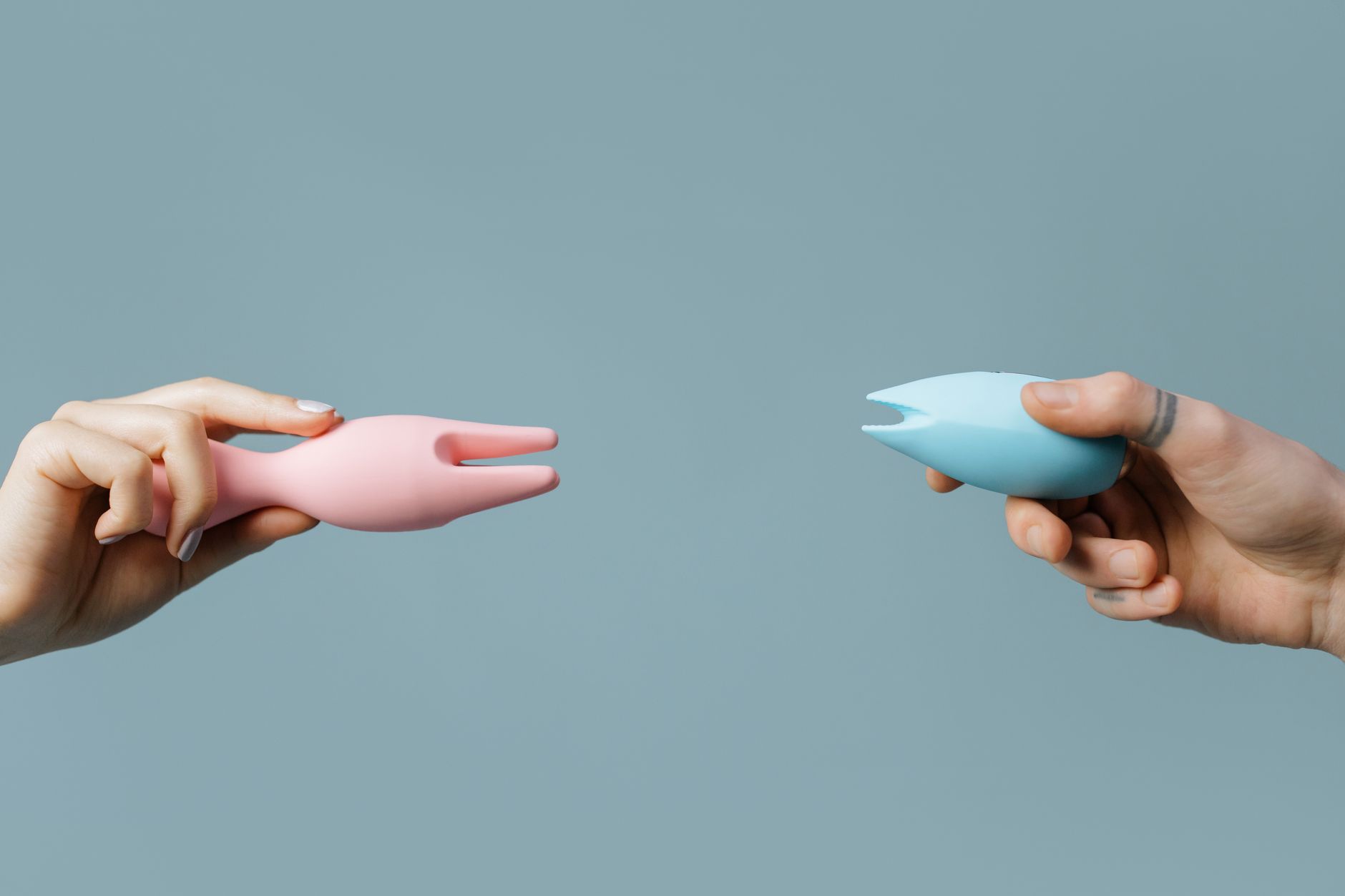
Photo by cottonbro studio on Pexels
Many couples find that once the initial discomfort passes, introducing a toy like a lemon vibrator becomes a turning point. Not because the toy itself changes anything, but because they've just had a conversation about pleasure and prioritizing each other's needs. That's the real shift.
FAQ: Partner resistance and introducing toys
What if my partner thinks a lemon vibrator is a threat to our sex life?
It's not. A toy doesn't replace partnered sex. It enhances your own capacity for pleasure, which often makes partnered sex better because you're more aroused and have more control over your own orgasm. Share that framing. Ask them to think about it as something that improves your experience together, not something that competes with it.
How do I know if my partner will ever get comfortable with this?
Watch for curiosity. If they start asking neutral or positive questions ("Does it hurt?" "How does it feel?" "Can I help?"), they're moving past resistance. If they're still using shame language months later ("I can't believe you need this"), they may be stuck. That's worth exploring in couples therapy.
Should I use a lemon vibrator without my partner's knowledge?
No. Secrecy breeds resentment and breaks trust. If you need to hide something from your partner, you have a bigger problem than toy acceptance. That said, you don't need their permission. There's a middle ground between sneaking and asking for approval. "I'm going to use this on my own. I wanted you to know" is different from "Can I use this?"
What if they want to use the lemon vibrator on me but I'm not ready?
Set that boundary. "I want to explore this on my own first. Once I'm comfortable, we can play with it together." Your timeline matters. Don't fast-track their involvement just because they're suddenly interested. Slow integration is more sustainable.
Can introducing a lemon clitoral vibrator actually improve our relationship?
Not the vibrator itself. But the conversation can. If you're talking openly about pleasure, desire, and what you each need, that's relationship work. The toy is just the catalyst. Some couples find it brings them closer because they're finally discussing something they'd been avoiding.
My partner said yes but seems uncomfortable during sex. What do I do?
Pause and check in. "Is this okay?" is a short question that opens real space. They might need to see you use it alone first. They might need you to stop using it during partnered sex for now. They might need to talk about what's making them uncomfortable. Slow down and listen. You're building trust here, not pushing toward a predetermined outcome.
The real endpoint
Resistance usually isn't about the toy. It's about fear. Fear that they're not enough. Fear that you're pulling away. Fear that things are changing. Those fears are worth addressing directly, which means having uncomfortable conversations.
Once you name the fear, the resistance often softens. Sometimes it doesn't. But at least you both know where you actually stand. And from there, you can decide whether to move forward together or acknowledge a real incompatibility.
A lemon vibrator isn't the thing that matters. What matters is your pleasure. And whether your partner is willing to prioritize that alongside their own comfort. Everything else follows from that.