The nervous part nobody talks about
You're a few months in with someone. Things feel good, maybe even great. But introducing a toy, especially one that's different from anything you've tried, carries its own friction. What if they think you're not satisfied? What if it feels awkward? What if your sensitive clit doesn't cooperate with an audience?
Honestly, those fears are exactly why you need to talk about it first. And not the weird, formal talk. Just actual sentences.
Start before you start
The conversation doesn't belong in bed. It belongs over coffee, or texting, or whenever you're both relaxed and clothed. Here's the gist: "I've been curious about trying a lemon vibrator. It's a suction toy, totally different from regular vibrators. Would that be something you'd want to explore together?"
That's it. Notice what's in there. No apology. No framing it as "something's wrong with how we are now." Just curiosity and an invitation.
If they say yes, great. If they say "I don't know, tell me more," you explain: a lemon suction toy uses gentle suction instead of vibration, it's actually easier on sensitive tissue, and it often feels less intense than what they might be imagining. If they seem hesitant, don't push. Ask what's making them nervous. Sometimes it's a misunderstanding. Sometimes it's insecurity. Sometimes they genuinely aren't interested, and that's information you need.
Why a lemon vibrator actually makes sense for sensitive clits
Here's the thing people don't realize: suction is gentler than friction. A traditional vibrator buzzes directly against tissue. A lemon clitoral vibrator creates a seal and stimulates through gentle suction and pulsing patterns. For someone with a sensitive clit, especially someone new to partnered sex, this is often way less overwhelming than expected.
Your nervous system won't be bracing for impact. You're not managing a sustained vibration. The sensation is more like a gentle pulling and releasing, which your body can actually relax into.
That matters in a new relationship especially, because sensitivity often comes from mild anxiety or newness, not actual tissue sensitivity. Once you're comfortable, the clit usually responds better. A lemon suction toy can actually help you get there faster because it feels safer to your nervous system.
The first time: make it low-pressure
Don't make it "the big moment." Make it a normal part of what you're already doing. You're together, you're intimate, and at some point you say, "Want to try it now?"
Water-based lubricant first. Always. Even if you don't think you need it, use it anyway. It makes the seal better and takes any friction out of the equation.
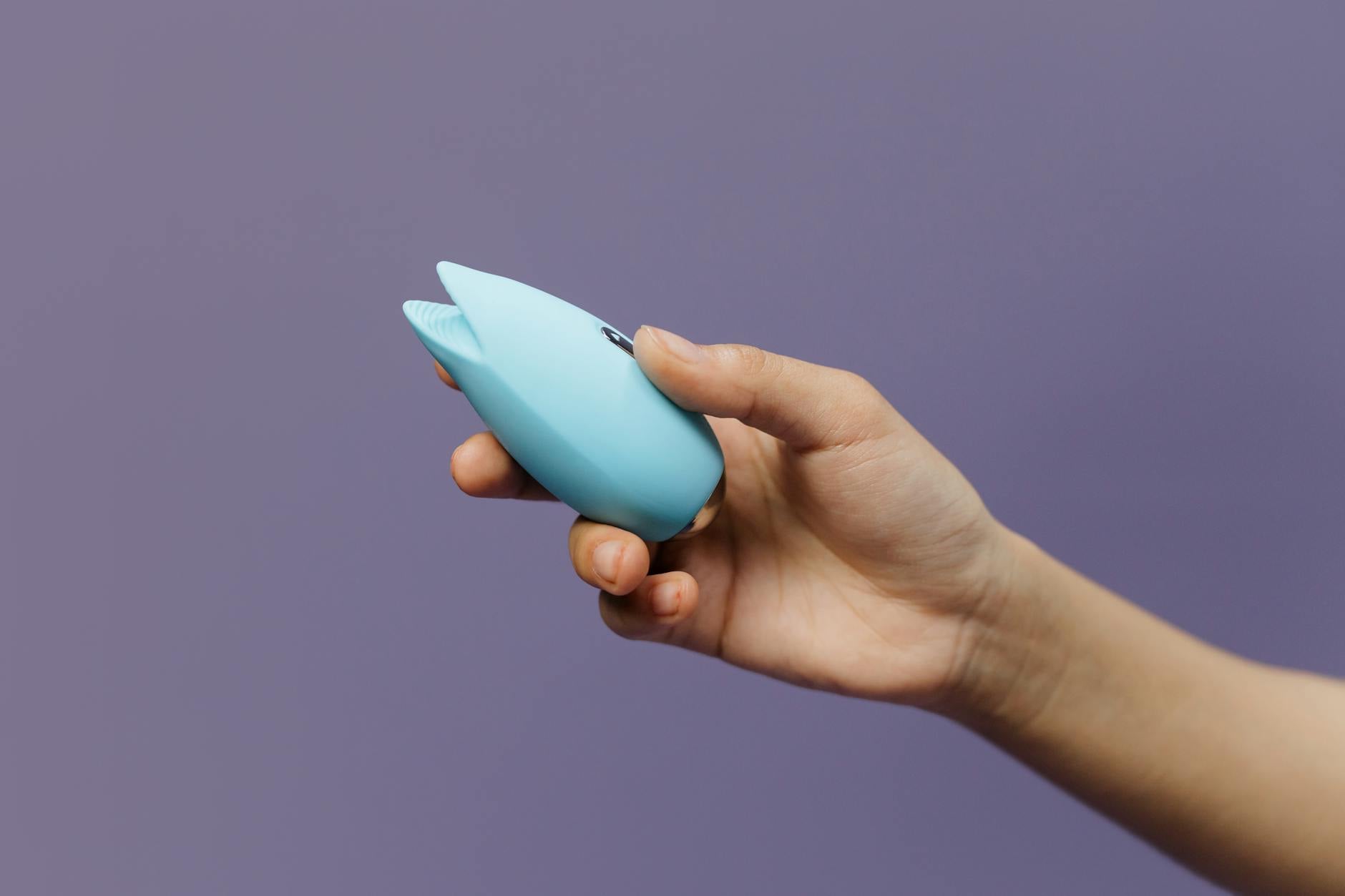
Start on the lowest pattern. The Lem, Hello Nancy's lemon clitoral vibrator, has several settings. Begin at pattern one. Your partner should not be watching intensely or waiting for a reaction like they're studying for a test. They can touch you elsewhere. They can be present without being focused entirely on your face.
If it feels good, stay there. If it feels weird but not bad, give it thirty seconds. If it genuinely doesn't feel right, stop. You have a full arsenal of other ways to be intimate. This toy is optional.
Many people find that the first sensation is strange, then pleasant, then actually pretty intense once their body adjusts. That's normal. If you need a break, take one. Communicate that out loud: "I need to pause for a second, but I want to keep going." Your partner isn't a mind reader.
Managing the self-consciousness part
Being vulnerable with someone new is already hard. Adding a toy can make you hyperaware of your body, your reactions, whether you're taking "too long."
Here's what helps. Before you start, agree on a simple check-in system. "Does this feel good?" can be answered with a yes, a maybe, or a no. Not every moment needs feedback. But knowing you can say "a little less intensity" or "actually, not right now" without it being a whole thing takes the pressure down significantly.
If you're taking a while to orgasm, that's not a failure. New partners, new sensations, mild anxiety about performance. All of that genuinely slows things down. That's not a reason to give up. It's a reason to enjoy the process instead of racing to a finish line.
What to expect from your body
Your clit might feel more sensitive than usual afterward. That's blood flow. It'll settle down in an hour. Your clit might also feel less responsive the next time you're together, especially if you used the toy intensely or for a long time. That's not numbness, that's just natural variation in sensitivity. It means the next time, maybe start a bit slower or take a longer break between sessions.
Orgasms with a partner and a toy can feel different from solo pleasure. Sometimes better, sometimes just different. Don't put pressure on yourself to "perform" an orgasm. If it happens, great. If it doesn't, you've still had an intimate experience and learned something about what your body likes.
What to tell your partner
After, when you're still close but the intensity has passed, talk about what happened. "That felt really good" or "I liked the lower patterns better" or "I was nervous but it helped" or "I'm not sure yet, let's try again next time."
Your partner needs actual information so they can show up better next time. "It was fine" tells them nothing. "The suction felt amazing once I relaxed, but I got in my head a little at the start" tells them exactly how to help.
If something didn't work, that's data, not rejection. A lemon vibrator might not be your thing, or it might need different timing, or different settings, or a different approach. You're not broken. You're just gathering information.
The longer conversation
As you get more comfortable with each other, this gets easier. You learn each other's bodies. You figure out what works. You also stop caring so much about "doing it right" because you realize there is no right. There's what you both enjoy, and everything else is just not your thing, and that's completely fine.
If your partner is curious about using a lemon clitoral vibrator with you over time, you might explore bringing them into the experience more directly. But that's a conversation for when you're both confident about what you're doing individually first.
When to get help
If pain happens, stop immediately. If anxiety about intimacy doesn't get better after a few attempts, talking to a therapist who specializes in sexual health can be really useful. There's nothing wrong with you, but there might be something worth understanding about why you're nervous.
If your partner is consistently dismissive of what you need or how you feel during intimacy, that's a relationship issue, not a toy issue. A good partner wants you to feel good. Full stop.
Introducing a lemon suction toy into a new relationship is actually one of the smartest things you can do. It forces communication. It removes some of the performance pressure. And it often helps both people understand their own bodies better. You're not just trying something new. You're building a foundation for actual intimacy.
People also ask
How do I know if my partner will be okay with a lemon vibrator?
You ask. Seriously. People are much less fragile than we think about this stuff. Most partners are either curious, enthusiastic, or neutral. The ones who get defensive usually have their own stuff going on, and that's worth knowing early. If you can't have a basic conversation about pleasure with someone you're sleeping with, that's information about the relationship.
Will using a lemon clitoral vibrator make me numb to regular touch?
No. Different types of stimulation work in different ways. Using a suction toy doesn't damage your sensitivity to your partner's hands or mouth. If you notice your clit feels less responsive after intense toy use, that's temporary blood flow adjustment, not permanent numbness. It settles within an hour or so.
What if I orgasm with the toy but not with my partner?
That's incredibly common and not a reflection of your attraction or their skill. Partnered sex involves emotion, vulnerability, and different sensations all at once. Solo pleasure or toy play is simpler neurologically. Both are valid. As you get more comfortable, the gap usually closes. But if it doesn't, that's something to talk through with your partner and maybe a sex-positive therapist.
Should I use a lemon vibrator alone first or with my partner the first time?
Ideal answer: alone first. You get to understand what the sensation is like without the self-consciousness of someone watching. You learn the patterns. You figure out pressure and rhythm. Then when you introduce it with your partner, you're not both discovering it for the first time at once. That said, if your partner is excited and you're curious, going in together is fine too. Just reset expectations. The first time will be awkward and uncertain. That's normal.
How do I bring up sensitivity concerns without making my partner feel bad?
Frame it as information, not criticism. "My clit is really sensitive right now" is different from "You're being too rough." One is about your body. One sounds like blame. Same action, totally different emotional impact. Your partner wants you to feel good. Give them the data they need to make that happen.
Can a lemon vibrator help if I'm nervous in new relationships?
Yes, often. Because the sensation is different and gentler, it can actually help your nervous system relax. You're not bracing for impact. You're not managing intense vibration. The suction sensation is often described as more soothing than overwhelming. That can help you be present instead of anxious. That said, the tool isn't magic. If the anxiety is really deep, working with a therapist alongside exploring new tools together is wise.