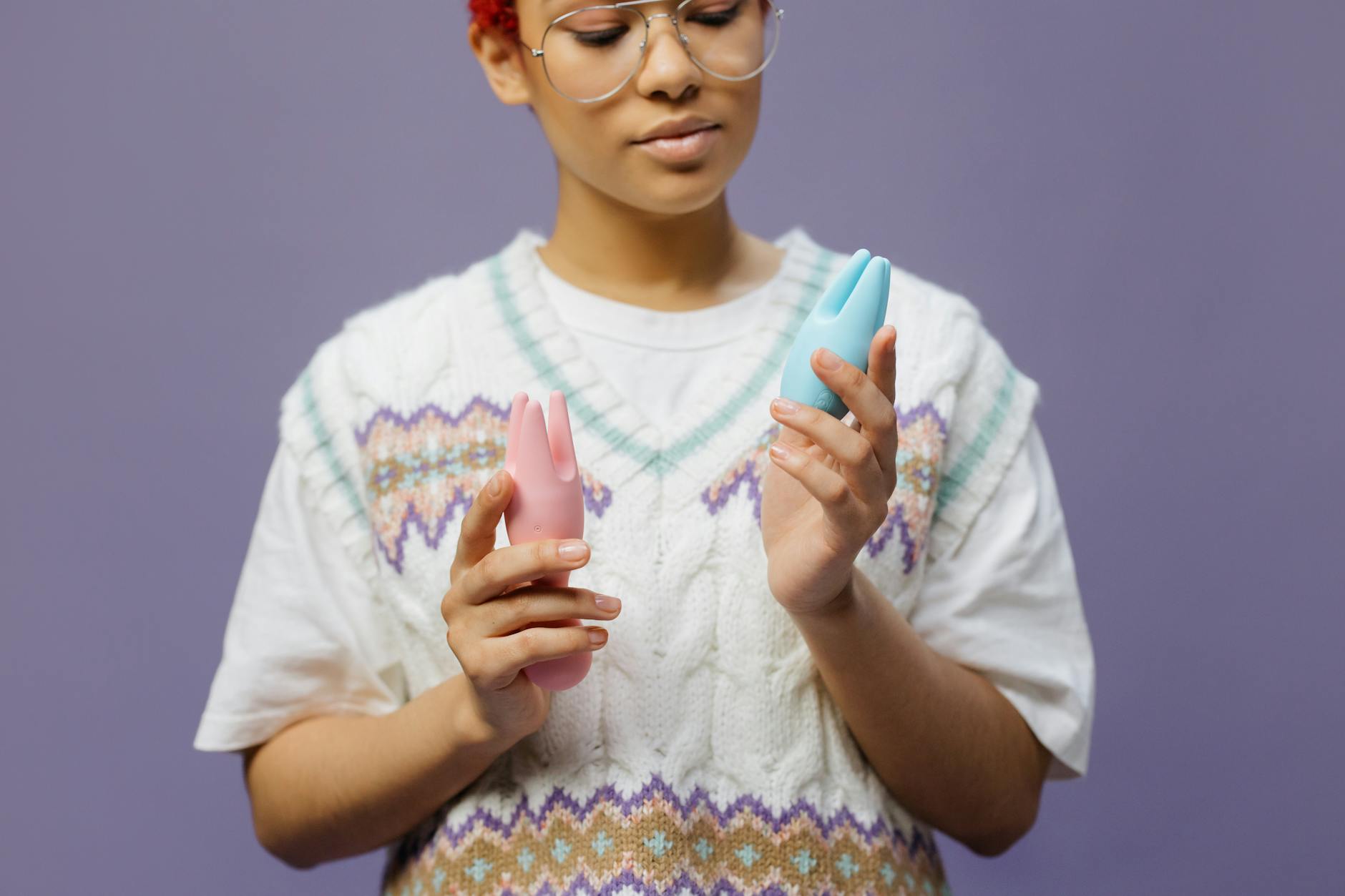
The timing mismatch nobody talks about
Here's the thing about aging: your bodies don't age at the same speed. One partner might be ready to go in five minutes. The other needs 20. And that gap isn't laziness or lack of attraction. It's biology, hormones, medication, stress, and just the sheer accumulated weight of a decade together.
I've worked with couples in their 40s, 50s, and beyond where this mismatch has quietly become a source of tension. The faster partner feels rejected. The slower partner feels pressured. Neither of you is wrong. You're just operating on different timelines. A lemon vibrator, used strategically, solves this without anyone having to compromise their actual pleasure.
Why arousal timing shifts as you both age
Three separate things are happening in your bodies at the same time.
First: Testosterone and estrogen both drop. This isn't gender-specific. Everyone's testosterone declines with age. Testosterone drives spontaneous desire. When it's lower, arousal becomes more responsive than spontaneous. One of you might still wake up hungry for sex. The other might need touch, warmth, or psychological engagement to feel turned on. Neither is better. They're just different windows.
Second: Medications and stress take a real toll. Blood pressure meds, antidepressants, sleep aids, pain relievers. Beta blockers and SSRIs are notorious for slowing arousal. Add a stressful job, caregiving for aging parents, or just the accumulated mental load of running a household, and one partner's arousal system basically goes into energy-conservation mode. You're not losing desire. You're depleted.
Third: Neural response actually changes. Younger people's bodies respond to novelty and novelty cues. Older brains reward familiarity and safety. That sounds romantic, and it is. But it also means arousal takes longer to build because your nervous system isn't firing on quick-trigger stimuli anymore. It needs consistent, sustained input.
There's nothing wrong with any of this. But pretending the gap doesn't exist is how resentment moves in.
The actual problem isn't the mismatch. It's trying to sync up.
Most couples try to fix this by waiting for the slower partner. The faster one stays in bed, scrolling, getting bored. Or they try to speed up the slower one, which just creates pressure and then resentment. Both strategies fail because you're operating from the assumption that you should be on the same timeline. You shouldn't be.
A lemon vibrator works because it lets the faster partner get started while the slower one continues warming up. You're not rushing anything. You're not waiting in silence. You're both actively engaged.
Here's how this actually plays out: Partner A starts with the Lem while Partner B does the touching, kissing, or just talking that helps them build arousal. Partner A isn't waiting. Partner B isn't feeling rushed. And by the time Partner B is fully aroused, Partner A is already there, so the clock stops running and actual connection happens.
The setup that actually works
Timing and permission matter here more than anything else.
Agree on the window beforehand. Don't try to fix arousal mismatches in the moment. Sit down clothed and actually talk about it. "I know I get ready faster than you do. I don't want that to create tension." That's a conversation that needs to happen outside the bedroom. Once it does, using a clitoral vibrator together stops feeling like a workaround and starts feeling like a solution you both chose.
The slower partner starts the activation. Not the faster one. If you're the one who needs 30 minutes, you initiate. Touch your partner. Kiss them. Tell them you want them. Set the pace. This keeps you in control of your own arousal instead of playing catch-up.
Give yourself permission to enjoy different parts. The person using the Lem might love the vibration alone. The partner might prefer the sensation of being touched or watching their partner use the vibrator. Both are valid. Both are pleasure. You don't have to be doing identical things to be intimate.
Keep lube within reach. Aging partners often benefit from extra lubrication regardless of gender. Water-based lube works with any vibrator, including lemon sucker toys. Apply it generously. It's not a failure. It's part of the setup.
Practical rhythm for mismatched partners
Here's a version that works for many couples:
Minutes 0-5: Touch begins. Kissing, undressing, conversation. No vibrator yet. The slower partner is doing what naturally turns them on. The faster partner is present but patient.
Minutes 5-10: Introduction of the lemon clitoral vibrator. Start on the lowest setting (usually pattern 1 or 2 on devices like the Lem). The faster partner might use it on themselves while the slower partner continues with manual touch. This is where separate arousal timelines become an asset instead of a problem.
Minutes 10-20: The slower partner reaches the point where penetration or deeper intimacy feels good. By now, the faster partner is fully aroused from the vibrator. Transition to whatever you both want next.
The whole thing works because no one is waiting. No one is performing. You're just following your own arousal while staying connected.
The mental shift that changes everything
Here's what I notice when couples implement this: the resentment usually dissolves faster than the arousal actually syncs up.
Why? Because you're no longer operating from a hidden story of "my partner doesn't want me enough" or "my partner is too impatient." You're saying, out loud, "We're different. That's okay. Here's how we work with that." The vibrator becomes evidence that you're both trying to meet each other.
Using lemon sexual toys together also normalizes the idea that pleasure isn't a performance. It's not about perfectly synchronized bodies. It's about two people who know each other well enough to say, "Here's what I need. Here's what works for me." That honesty is way sexier than faked synchronization.
When arousal differences signal something deeper
Sometimes the mismatch isn't timing. It's interest.
If one partner consistently doesn't want to use any tool, any touch, or any sexual activity, that's a different conversation. That might be depression. It might be unresolved anger in the relationship. It might be medical. A lemon vibrator can't fix relationship rupture. What it can do is create a safe way to explore whether the issue is really arousal timing or something that needs deeper work.
If you're stuck here, a conversation with a couples therapist trained in sexual health is worth the investment. Sometimes the slower partner isn't actually slower. They're checked out for a reason.
FAQ
How much time should I actually spend on warm-up if we have different arousal speeds?
There's no magic number, but I usually tell couples to budget 15-25 minutes total from the first kiss to the point where both people feel ready. The key isn't the clock. It's that both partners feel fully engaged during those minutes. If you're rushing because you're bored, that's a sign you need more foreplay variety, not less time.
If I'm the faster partner, does using a lemon vibrator on myself mean my partner isn't arousing me?
Not at all. It's the opposite. You're staying engaged while your partner catches up. The vibrator is a tool that lets you both stay present. You can use it while making eye contact, talking, or touching your partner. It's not a replacement for connection. It's a facilitator.
Can aging partners have the same arousal speed as younger people?
Sure. Some couples find their timing improves with age because they're less in their heads and more in their bodies. But statistically, arousal response does slow as we age due to hormonal changes, blood flow changes, and medication. That's not a problem to fix. It's a reality to work with.
What if my partner resists using any sex toys because they feel insecure?
This is common. Often the resistance isn't about the toy. It's about the implicit message your partner hears: "You're not enough." That requires a conversation that has nothing to do with the vibrator. Try: "I want more time with you. I don't want either of us to feel rushed. This tool helps us both relax." Once the underlying fear shifts, the resistance usually does too.
Should we use a lemon clitoral vibrator every time, or just sometimes?
Honestly, use it as often as it serves you both. Some couples use it every time and love it. Others use it when they want to spend more time together but can't sync naturally. There's no right answer. If it creates pleasure and connection, it's right for you.
Can medication really slow arousal this much?
Yes. SSRIs, blood pressure meds, and antihistamines are known to reduce sexual desire and arousal. If arousal suddenly dropped after you started a new medication, mention it to your doctor. There might be alternatives with fewer sexual side effects. You deserve that conversation.
The real win here
I don't want to oversell this. A lemon vibrator won't fix a broken relationship. It won't make someone want you if they don't. But it will bridge the gap between partners who actually desire each other but are running on different timelines. And that gap is fixable.
The couples I work with who use tools like clitoral vibrators alongside honest conversations about arousal timing report higher satisfaction and less resentment overall. Not because the vibrator is magic. Because they stopped pretending their bodies should work the same way and started working with how they actually work.
That shift from "fix me" to "let's figure this out together" changes everything. If you're ready to have that conversation with your partner, that's where everything gets better.