Let's be real about what stress does to your body
Your clitoris is not separate from your nervous system. When you're stressed, your body floods with cortisol. Your pelvic floor tightens. Blood doesn't flow where it needs to for arousal to build. What felt responsive last week now feels numb. What felt gentle now feels too intense. Your sensitivity becomes a moving target.
This isn't a problem with your body. It's your nervous system doing exactly what it was designed to do. When you're under threat, pleasure gets deprioritized. It's survival logic, and it's wildly inconvenient when you're trying to have sex.
How stress rewires your sensitivity
Under stress, three things shift physiologically. First, your sympathetic nervous system (fight or flight) dominates. Blood flow to your genitals decreases because your body thinks resources are needed elsewhere. Your clitoris becomes less engorged, less sensitive. Touch that normally feels amazing now feels muted.
Second, your pelvic floor tightens chronically. Stress lives in your muscles. Over weeks and months of high stress, your pelvic floor develops what I call "tension armor." This changes how vibration transmits through the tissue. Some patterns feel blocked. Others feel raw.
Third, your brain's arousal circuitry quiets. Even if your clitoris receives stimulation, the signal to your brain gets dampened. You might be receiving touch but not feeling it. That disconnect is the most frustrating part. Your body isn't broken. Your threat detection system is just overactive.
Why a lemon vibrator helps when sensitivity fluctuates
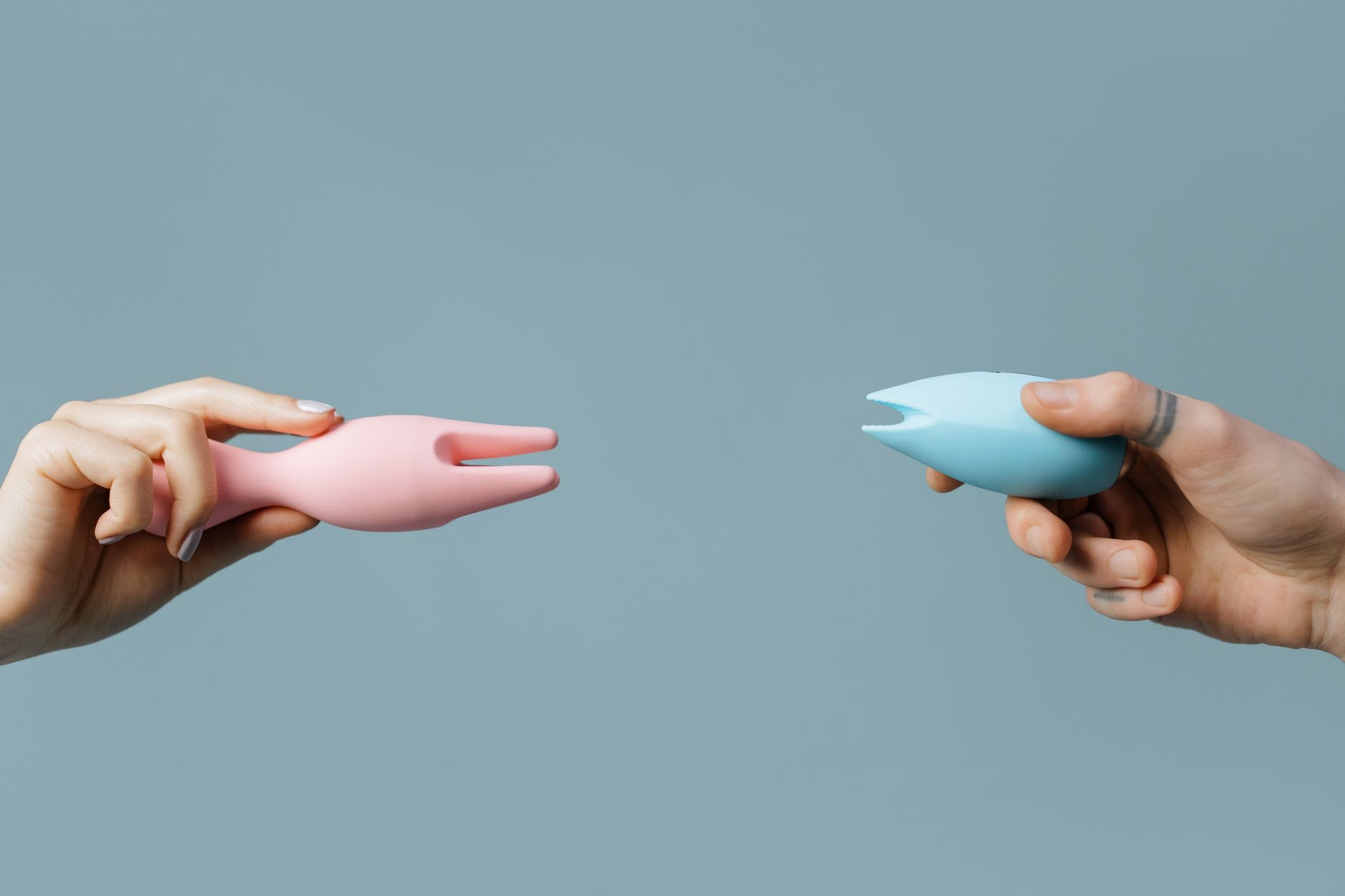
The suction-based design of a lemon clitoral vibrator (also called a lemon sucker) works differently than traditional vibration. Instead of relying purely on direct vibrational frequency, suction creates a gentle pressure gradient. It pulls rather than pounds. This matters enormously when your sensitivity is all over the map.
With a standard vibrator, you're betting that the vibration frequency matches what your nervous system can tolerate today. Some days it's too much. Other days it's not enough. You're adjusting intensity constantly, trying to chase the sweet spot.
A lemon vibrator gives you more control. Suction is more responsive to your body's changes. You can modulate by adjusting your positioning, the seal, or the pattern. You're not locked into one frequency. You're collaborating with your own arousal, which is exactly what you need when stress has made your sensitivity unreliable.
The step-by-step reset when stress has messed with your baseline
Start by acknowledging that today's sensitivity is not yesterday's and probably won't be tomorrow's. That's not failure. That's honest.
Day one: the stress acknowledgment check. Before you do anything, notice your stress level. Not on a scale of one to ten, which is useless. Ask yourself: Where am I holding tension? Can I take a full breath? Do I feel rushed? If you're in active stress mode, you might skip pleasure work entirely. That's okay. Some days the most responsible thing is to rest.
Day two: the warm-up extension. When stress has tightened your pelvic floor, you need longer to arrive at arousal. Extend your warm-up by five to ten minutes. Breathe. Touch yourself without a toy. Let your nervous system know that nothing is being demanded of it right now. This is not a performance. You're just recruiting your parasympathetic nervous system (rest and digest), which is your ally when stress has hijacked the system.
Day three: the pattern choice. Start with a lower, broader suction pattern rather than a high-frequency pulse. The Lem vibrator, for instance, has gentler patterns that work beautifully when sensitivity is frayed. Avoid jumping to maximum intensity immediately. Let the pattern do the work. Suction doesn't need to be forceful to be effective.
Day four: the positioning experiment. When stress is present, your clitoris might not be where it usually is anatomically. Tension and blood flow changes shift things slightly. Rather than assuming you know how to position the vibrator, explore. You might need to angle it differently than you did last month. This sounds tedious, but it's actually liberating. You're not waiting for your body to come back to normal. You're meeting it where it is.
Day five: the feedback loop. After five to ten minutes with the vibrator, pause and check in. Do you feel more sensation now than when you started? Or less? This tells you something about your nervous system state. If you feel more sensation, you're on the right track. If less, your system might need even more time to settle. Extend the warm-up further or try again tomorrow.
The nervous system anchor points that actually work
I'm going to give you three grounding practices that shift your nervous system before pleasure work even starts. These are not meditations. They're practical nervous system resets.
Bilateral stimulation. This is clinical shorthand for "do something with both sides of your body at once." It settles an activated nervous system. Before using your lemon clitoral vibrator, try this: tap your left knee and right knee alternately for thirty seconds while taking slow breaths. Or place your hands on your inner thighs and apply gentle, alternating pressure. This bilateral rhythm tells your nervous system that you're safe. It's literally used in trauma therapy because it works.
Cold water on your wrists. Thirty seconds of cold water activates your vagus nerve, the main highway of your parasympathetic nervous system. Cold water on your wrists is less jarring than dunking your face (that's extreme vagal brake activation). After cold water, your nervous system often feels reset. Try it before pleasure sessions when stress is high.
Humming or vocalization. This sounds weird, but sound output activates your vagus nerve downward (calming direction). Hum, sing, or even gentle moaning engages your system differently than silent pleasure. Some of my clients report that vocalization alone, before touching themselves at all, makes arousal more available.
When to pause and when to persist
Here's the distinction that changes everything: numbness is different from pain. If you're numb, keep going. Numbness usually means your nervous system just needs more parasympathetic time. As you relax, sensation often returns. It's not instant, but the arc is usually upward.
If you feel pain, stop. Pain is your nervous system saying "this is not the time." Pain under stress often means your pelvic floor is too tight or your system is genuinely in threat mode. Pushing through pain teaches your body the wrong lesson.
Most people with stress-related sensitivity fluctuation experience numbness, not pain. Your clitoris can receive stimulation without you feeling it because your brain is still partially in threat mode. The vibrator is working. Your nervous system is just not receiving the signal yet. Time and relaxation fix this. You don't need more intensity. You need more parasympathetic tone.
The partner conversation when your sensitivity is unreliable
If you're having sex with a partner and your sensitivity is fluctuating, tell them. Not "I'm broken" but "My nervous system is stressed today, so my sensitivity might be different." That sentence does three things: it explains the situation without blame, it sets realistic expectations, and it invites collaboration rather than performance.
A partner who understands your nervous system can help. They can slow down. They can check in. They can help you breathe. The worst outcome is when you're trying to perform arousal while you're internally trying to manage stress. Your partner can't read your mind, and you shouldn't have to hide your system from them.
FAQ: Stress, sensitivity, and your lemon vibrator
Why does my clitoral sensitivity change so much when I'm stressed?
Stress activates your fight-or-flight response, which diverts blood flow away from your genitals and toward your limbs and brain. This reduces engorgement and sensitivity. Additionally, stress hormones like cortisol directly dampen the neural signals that transmit pleasure to your brain. It's not psychological. It's purely physiological.
Can I use my lemon vibrator during high-stress periods?
Absolutely. In fact, a lemon clitoral vibrator can be especially helpful during stress because suction-based stimulation is gentler and more adaptable than traditional vibration. The key is adjusting your expectations. You might need longer warm-up time, gentler patterns, and more frequent check-ins with your body.
How long does it take for sensitivity to return after a stressful period?
It varies. If your stress is acute (a few days), sensitivity often bounces back within a week. If stress is chronic, it can take several weeks of consistent nervous system settling before your baseline sensitivity fully returns. This is why practices like the nervous system anchors I mentioned are so valuable. They speed the process.
Should I use a higher intensity setting to compensate for stress-related numbness?
No. Higher intensity on a numbness day usually doesn't help and often backfires. Your clitoris isn't numb because it needs more power. It's numb because your nervous system is in threat mode. More intensity teaches your system that threatening times require more extreme stimulation. Instead, focus on lowering your stress response first, then sensation often returns naturally.
Can stress cause permanent changes to clitoral sensitivity?
Chronically high stress over years can sensitize your nervous system to threat, which makes arousal harder overall. But this is reversible. Once stress decreases and your nervous system recalibrates, sensitivity usually returns. The lemon vibrator helps this recalibration because its gentler approach doesn't override your nervous system's signals.
What's the difference between stress-related numbness and the numbness I get from using my vibrator too much?
Stress-related numbness happens even without a vibrator. You notice it when you're trying to self-pleasure or have partner sex. Vibrator-induced numbness usually follows heavy use and improves after a few days off. Both respond well to nervous system settling and time, but they have different causes. If you're not sure which you have, try a week without your vibrator and see if sensation returns. If it doesn't, stress is likely the culprit.
When stress changes everything, your lemon vibrator becomes a nervous system tool
You're not broken when stress tanks your sensitivity. You're experiencing exactly what a healthy nervous system does under threat. The path forward isn't forcing arousal despite stress. It's lowering your stress response first, then letting arousal follow naturally.
A lemon clitoral vibrator helps because it doesn't require you to already be highly sensitive. Suction works with your body as it is today, not as you wish it would be. That flexibility, paired with the nervous system practices I've outlined, usually restores your baseline within weeks.
Your pleasure deserves attention. And so does your nervous system. Getting both right takes patience. You're not waiting for normal to return. You're building a new normal that works with stress instead of against it.
If stress has become chronic or you're noticing that pleasure is staying out of reach despite nervous system work, reach out. Sometimes a conversation with someone trained in nervous system dynamics helps clarify what's really going on. We're here to help.