Let's talk about the week when nothing works
You're mid-cycle and suddenly sex sounds absolutely perfect. Three days later, it sounds like a chore. Four days after that, you're back to wanting your partner's hands on you the second they walk in. This isn't broken. This is your hormones doing their job.
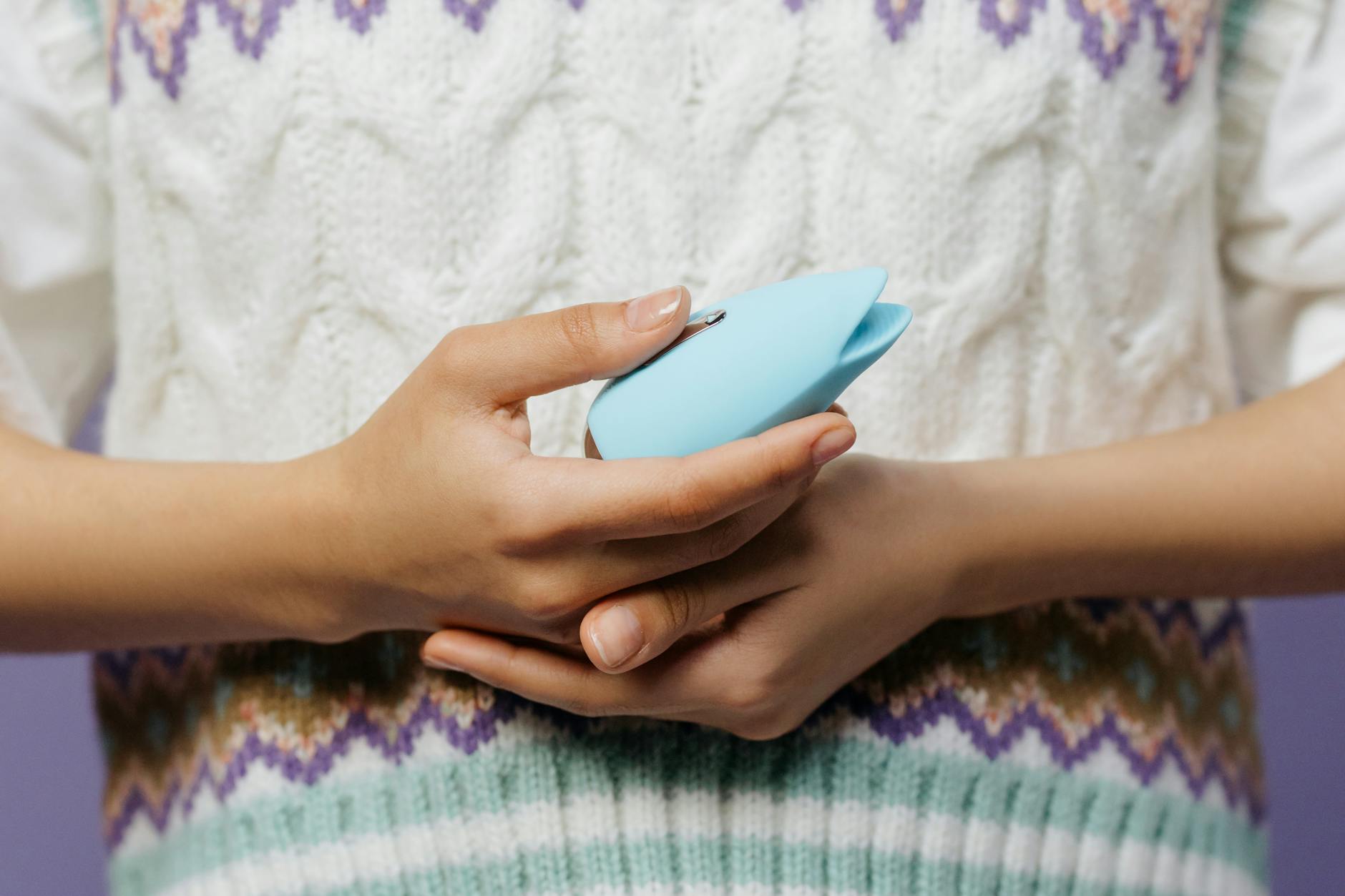
The problem is that pleasure tools are usually designed for one consistent experience. A lemon clitoral vibrator is different because it can adapt to the three or four wildly different versions of your desire that show up every month.
How your cycle actually affects arousal
Here's the pattern almost everyone experiences. In the follicular phase, right after your period ends, estrogen is climbing. Desire builds naturally. Your clitoris is more sensitive, arousal happens faster, and orgasms feel sharper. This is when a lemon vibrator at medium intensity feels incredible.
Then comes ovulation. This is the peak. Testosterone surges. Everything feels heightened. Sensitivity is at maximum. This is when you might use the Lem at its highest settings and still want more.
Then luteal phase hits. Progesterone rises. Everything gets duller. Your body needs more stimulation to feel the same sensation. Arousal takes longer. This is when a lot of people stop trying because the same technique that worked last week now feels pointless.
Then comes the menstrual phase. Energy is low. Some people want zero touch. Others find that a lemon sexual toy actually helps ease cramping and emotional heaviness because the gentle suction brings blood flow and releases tension.
The cycle repeats. And every month, the temptation is to assume something is wrong with you.
Why standard vibrators fail at this
Most vibrators have one pattern and one intensity range. They're built for consistency. But you're not consistent. Your body changes every seven days. A vibrator that worked on Tuesday might feel too intense, too dull, or completely wrong on Friday.
A lemon clitoral vibrator solves this because suction, unlike penetration or buzzing, is inherently adaptable. The Lem doesn't rely on tissue thickness or blood flow consistency. It works by creating a gentle seal and pulsing suction that stimulates the entire clitoral network, not just the surface. When your arousal is low, the gentler patterns feel sufficient. When desire is high, the stronger settings still satisfy without feeling aggressive.
That adaptability matters because you don't have to abandon pleasure halfway through your cycle.
Mapping your cycle to intensity settings
Here's the framework I recommend.
Menstrual phase (days 1-5). If you're touching yourself at all, start at patterns 1-2 on the Lem. The goal isn't explosive orgasm. It's gentle, sustained pleasure that might also ease pelvic tension. Some people find this phase brings their best, most emotional orgasms because the slow buildup feels meditative rather than goal-oriented.
Follicular phase (days 5-12). This is when arousal ramps up. Move to patterns 3-5. Your clitoris is becoming more sensitive naturally. Shorter warm-up time. Faster buildup. A lemon vibrator here feels like it's matching your body's own momentum.
Ovulation (days 12-16). Peak desire. Patterns 6-8 or whatever the Lem's highest settings are. Everything feels electric. You might orgasm faster and more intensely. This is when people often discover that they actually prefer suction to vibration because the concentrated stimulation feels more precise.
Luteal phase (days 16-28). Desire crashes. Go back to patterns 1-3, but add longer warm-up time. Fifteen to twenty minutes instead of five. Your body will get there, but patience matters. Use lube even if you normally wouldn't because progesterone can reduce natural lubrication. The Lem still works brilliantly here because it's not dependent on friction.
This isn't a prescription. It's a starting point. Your cycle might be a 26-day cycle or a 35-day cycle. Your peaks might come on different days. But the pattern of high-desire, low-desire, moderate-desire is consistent for almost everyone.
Why tracking matters (and how to do it)
You don't need an app, though they help. Just make a note: what intensity felt good today, and what day of your cycle are you on. After two months, you'll see your own pattern clearly. You'll know whether your peak desire comes on day 12 or day 14. You'll know if your luteal crash is brutal or mild.
This matters because it takes the shame out of "not being in the mood." You're not rejecting your partner or your own sexuality. You're in the luteal phase. You're literally in a different hormonal state. Of course arousal feels different.
Partners often get this wrong. They take low desire personally. But if you can say "I'm in my luteal phase, everything feels muted right now, so let's use longer warm-up and patterns 1-3," suddenly it's not a rejection. It's information. It's a plan.
The lube-cycle connection
Natural lubrication also fluctuates with your cycle. Peak at ovulation. Minimal during menstruation and late luteal phase. This is why people think they've lost capacity for pleasure during their luteal phase. They haven't. They've just lost the biological signal that everything is working.
Use water-based lube during low-lubrication phases. This isn't about being broken. It's about matching your environment to your goal. A lemon clitoral vibrator with lube during your luteal phase can be even more satisfying than without it during your follicular phase, because you're acknowledging your body's actual state rather than fighting it.
Solo vs. partnered pleasure across your cycle
If you're partnered, cycle awareness changes everything. During high-desire weeks, you might want to initiate more. During low-desire weeks, you might discover that solo exploration with the Lem is what you actually need, not partnered sex.
This is not a deficit. It's variation. And it's extremely normal. Many people find that their solo practice with a lemon sexual toy actually improves partnered sex because they understand their own rhythm better.
If you're rebuilding desire after a long relationship ended, cycle tracking with a tool like the Lem helps you separate "do I want sex" from "am I in a phase where arousal naturally dips." Those are different questions with different answers.
When to worry (and when not to)
Some fluctuation is normal. Losing desire for an entire week, then regaining it, then losing it again, is your cycle. Losing desire for six months straight is not. That's worth talking to a doctor about.
Similarly, if one particular phase of your cycle brings pain, that's worth attention. A lemon vibrator can help with discomfort during menstruation, but sharp pain during ovulation or cramping during the luteal phase that's new or worsening is worth investigating.
Hormonal birth control changes everything here, too. If you're on the pill, your cycle is suppressed. Your desire patterns might be flatter. Some people like this. Others feel like they've lost the natural peaks that make pleasure feel alive. If that's you, exploring methods that allow a natural cycle, or talking to your doctor about different hormonal options, might matter.
The mental piece that everyone skips
Here's what nobody tells you: even knowing your cycle, your brain still gets in the way. You have low-desire week. You assume sex is off the table. But you've never actually tried. You've just decided based on Tuesday's forecast.
The thing about a lemon clitoral vibrator is that it's low-pressure. You don't need to perform. You don't need to prove anything. You can start at pattern 1 and see what happens. Often, arousal builds. Sometimes it doesn't. But you've given your body a chance instead of pre-rejecting yourself.
This matters in relationships. Partners feel rejected when you say no preemptively. But if you say "I'm in a low-desire week, but let's try," suddenly it's collaborative rather than oppositional.
What to actually do this week
If you're in a high-desire phase right now: start tracking. Write down what day of your cycle you're on and what intensity setting felt best. Notice your warm-up time. Notice what kind of touch your partner could add that would enhance the toy rather than compete with it.
If you're in a low-desire phase: don't assume you can't be aroused. Extend your warm-up. Use lube. Start at the gentlest setting. Give yourself twenty minutes instead of five. Notice whether the Lem helps, or whether you actually need touch from a partner, or whether rest and connection without sex is what you're craving.
If you're partnered: tell your partner what you've learned about your cycle. Show them the intensity levels. Make it collaborative. "When I'm in my luteal phase, I'll want the Lem at these settings, and I'll probably need you to spend more time on foreplay first." That's not withholding. That's building a better experience for both of you.
Your desire isn't stable because your hormones aren't stable. A lemon clitoral vibrator is stable because it adapts. That's why it works when everything else feels like it's failing.
People also ask
Can a lemon vibrator help if my cycle is irregular?
Yes, but tracking becomes more important. If your cycle is 24 days one month and 35 days the next, you can't rely on calendar predictions. But you can still notice the pattern in real time. After a period starts, follow your arousal and energy for two weeks. Most people hit a peak somewhere in there, and a low point somewhere else. Use the Lem to explore those phases as they come, rather than trying to predict them.
Does hormonal birth control change how a lemon clitoral vibrator feels?
It can. Birth control suppresses your natural cycle, so you lose the dramatic peaks and valleys. Some people find that a lemon sexual toy becomes more reliably satisfying because desire is flatter and more consistent. Others miss the natural intensity that comes with ovulation. The Lem still works beautifully either way, but your intensity preferences might be different than someone off hormonal birth control.
What if my desire never comes back in the high-desire phase?
If you're not seeing a clear peak at all, talk to your doctor. It could be thyroid-related, stress-related, or related to other hormonal conditions like PCOS. But try the tracking first. Sometimes people think their peak is missing when they're actually just not noticing it because they're not paying attention to their body. A lemon vibrator can help you tune in to subtler arousal patterns.
Is it normal to orgasm faster during ovulation?
Completely normal. Testosterone peaks at ovulation. Your clitoris is more engorged. Your sensitivity is genuinely higher. A lemon clitoral vibrator might bring you to orgasm in three minutes during ovulation and fifteen minutes during the luteal phase. Both are working correctly. Your body is just in a different state.
Can tracking my cycle with a sex toy help with conception awareness?
Tracking arousal can be part of natural cycle awareness, but it's not as reliable as basal body temperature or cervical mucus tracking if you're trying to conceive or avoid conception. If that's your goal, talk to someone trained in fertility awareness methods. But pleasure-focused cycle tracking with the Lem is a nice bonus awareness to develop alongside those practices.
What if my partner's desire doesn't match my cycle?
Then you have a mismatch, and a lemon vibrator can actually help. If your partner wants sex during your low-desire week, solo exploration with the Lem first can help you build arousal faster. If you want sex and your partner doesn't, the Lem gives you autonomy. If your cycles are completely opposite (which is common), you get to stop assuming one person is always the problem. You're just in different phases. Plan around it.
Your desire isn't broken. It's just cyclical, like everything else in your body. A lemon vibrator is the tool that bridges those cycles because it works beautifully whether you're at peak arousal or in a quiet phase. Once you understand your pattern, everything gets easier.