How to Use a Lemon Vibrator When Your Partner Thinks Toys Threaten Their Role
Your partner worries a vibrator means they're not enough. Here's the conversation to have, the fears to address, and how to use a lemon clitoral vibrator as a bridge, not a wedge.
Your partner doesn't actually think a vibrator is too kinky or weird. What they think is this: if you need a vibrator to feel good, that means I'm not enough. It's not about the toy. It's about whether they matter.
That fear is real, and it's worth taking seriously. Dismissing it as insecurity won't dissolve it. Ignoring it and buying a lemon clitoral vibrator anyway absolutely will backfire. But here's the thing. That fear is also based on a misunderstanding about how bodies work and what pleasure actually means in a partnership.
Once you untangle that misunderstanding, introducing a toy becomes straightforward. You're not defending yourself against an accusation. You're opening a conversation about desire that probably needed opening anyway.
Most of us grow up believing pleasure is binary. Either your partner makes you come, or they don't. Either sex is satisfying, or it's a failure. That framing turns your body's genuine needs into a referendum on your partner's performance.
Here's what's actually true. Your ability to orgasm, the intensity of sensation you feel, how quickly you get aroused. All of that is influenced by hormones, stress, medication, whether you slept last night, the time of your cycle, how safe you feel, what else is going on in your life, and yes, your partner's technique. But mostly it's influenced by what your nervous system needs in that moment.
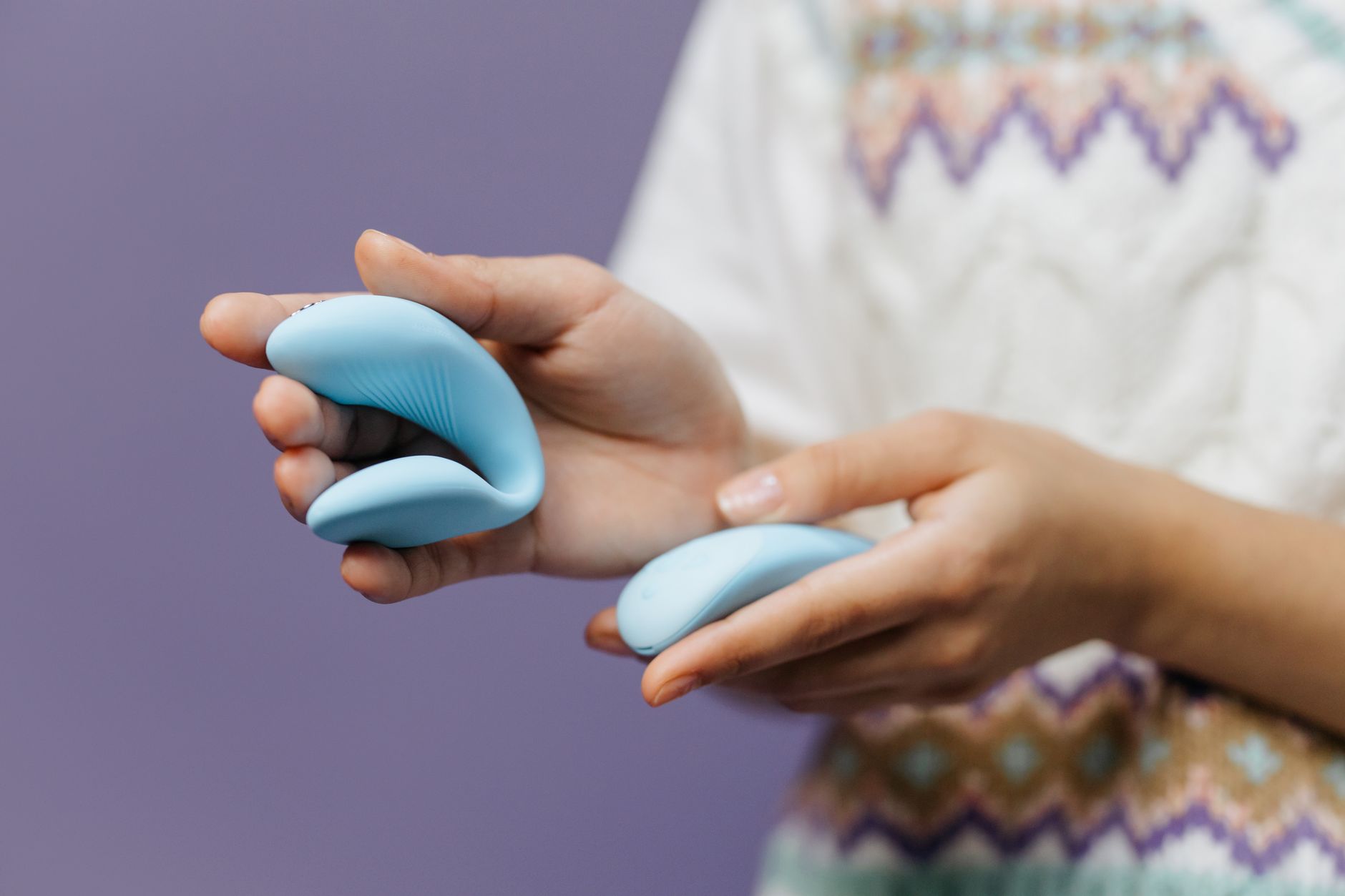
A vibrator doesn't replace your partner. It solves a physics problem. The suction and rhythmic pressure of a device like a lemon vibrator stimulates your clitoral nerves in a way that fingers, a tongue, or penetration sometimes can't replicate. That's not a judgment on your partner's skill. It's just how bodies are built.
Don't lead with the vibrator. Lead with curiosity about pleasure.
Pick a calm moment, not during sex, not when either of you is stressed. Say something like: I've been thinking about our sex life, and I want to explore some things that might feel even better. I'm curious whether you'd be open to that.
Then listen. Don't interrupt. Let them say the thing they're actually worried about. It might be exactly what you expected (I feel like that means I'm not enough) or something more specific (I'm worried you'll prefer it to me, or I just don't know how to react to that kind of thing).
Once they've named it, you can address it. The way you address it matters more than what you say.
If they're worried you'll prefer the toy, name that directly. Say: I won't. Here's why. The thing I love most about sex with you is you. Your touch, your presence, the fact that it's you and me together. A toy doesn't change that. It adds something, but it doesn't replace you.
Then explain what it actually does. A lemon vibrator or lemon clitoral vibrator works through air-pulse technology that creates a suction sensation. It's not jerky or mechanical the way some vibrators are. It feels almost natural, which is why it works for people who think they don't like vibrators. But here's the key part. I want to use it together. With you. I want you to be involved because that's what makes it feel good.
That last sentence is the real frame shift. You're not talking about solo pleasure with a toy. You're talking about a shared experience where the toy is one instrument among many. You're still there. Your partner is still there. The toy is just adding depth.
Once they've agreed to try, don't make it A Big Thing. Don't light candles and dim the lights and treat it like you're inaugurating a new chapter. That pressure kills arousal faster than anything else.
Start with your normal foreplay. Kiss, touch, get aroused together the way you usually do. Once you're already engaged and both turned on, bring the toy in slowly. You could say something simple like: I want to try this now. You could turn it on at the lowest setting and let them hear what it sounds like before it touches your skin. Familiarity softens resistance.
Let them hold it, if they want. This does two things. It gives them agency and control (which addresses the fear that they're being sidelined). It also makes it impossible for them to pretend the toy is doing the work. They'll feel exactly how much you're responding, and to what. They'll see that you're still present, still touching them, still engaged.
Don't expect an orgasm the first time. Honestly, don't expect much of anything the first time except awkwardness and learning. The goal is not pleasure yet. The goal is comfort with the object and the situation.
Here's what you absolutely cannot say, ever: This feels so much better than when you do it.
Even if it's true, even if it's the obvious thing, don't say it. What your partner will hear is: you're not enough.
Instead, say things like: This is different. I like how it feels. Or: I want to come this way because I've been thinking about it, and I want to explore that with you. Or: I'm amazed how responsive my body is when we do this together.
You're describing sensation without implying deficit. You're making it clear that this is about adding something, not subtracting his role.
A lot of resistance dissolves once the object actually exists in your shared space. It's less scary when it's just sitting on your nightstand. It's not mysterious or forbidden.
Keep it accessible. Use it. Talk about it lightly. A lemon sexual toy or lemon clitoral vibrator is just equipment, like a vibrator would be in any relationship that uses them. The more casual and integrated it becomes, the less threatening it feels.
Build rituals around it if that helps. Maybe it becomes part of weekend sex, or foreplay on nights when you know you have more time. Predictability softens fear. If your partner knows that Wednesday nights are vibrator nights, that's less surprising than pulling it out randomly.
If after a genuine attempt, your partner refuses to engage with toys at all, that's worth addressing more deeply. Not because they're wrong for not wanting a vibrator. But because the conversation underneath. I'm afraid I'm not enough is often a symptom of something larger. Anxiety about your desire, insecurity about their performance, unresolved tension about whether you're actually attracted to them.
But most of the time, resistance isn't total. It's just caution. And caution dissolves once your partner realizes that you using a lemon clitoral vibrator doesn't mean anything about their worth. It means you're willing to explore pleasure together, and you want them in that exploration.
Only if you position it that way. If you introduce a toy as something you're doing to him or instead of him, then yes, he'll feel sidelined. But if you frame it as something you're doing together, and if you keep him involved and present, he won't. The key is making sure your partner understands that the vibrator is not a substitute for his touch, his presence, or his role in your pleasure. It's an addition. Most partners feel less replaced and more connected once they see that their partner is more satisfied and more engaged.
Start with something that looks less mechanical and more natural. A lemon clitoral vibrator or lem vibrator designed with air-pulse technology feels less intimidating than a traditional vibrator because it doesn't look like a robot. The shape is intuitive, and the sensation is gentle at low settings. Let your partner help you choose, or at least see what you've picked. Removing the mystery helps.
Frame it around your own body and curiosity, not their performance. Say: I've been thinking about exploring new sensations, and I'm curious about trying something together. Not: I need this because you're not doing it right. The first is about you. The second is criticism disguised as honesty.
Absolutely together. In fact, coupling a vibrator with partner involvement often feels better than either alone. Your partner can hold the toy, control the intensity, incorporate it into foreplay, or use it on you while touching you elsewhere. The collaboration is actually where the magic happens. Many couples find that using a lemon sexual toy together deepens their connection because it requires communication and presence.
That's okay. Not everyone loves vibrators, and that's fine. But try to understand what specifically they didn't like. The sensation? The sound? The idea that you seemed to enjoy it more than them? Those are different problems with different solutions. If it's the sensation, maybe a different type of toy works better. If it's the sound, some lemon clitoral vibrators are quieter. If it's about your pleasure seeming separate from theirs, you need to go back to the conversation about what pleasure together actually means.
Start slowly. Once every week or two is plenty while your partner is building comfort. Overusing it while they're still hesitant can feel like pressure. As they get used to it and see that your connection isn't threatened, you can introduce it more often. Let your partner set the pace. The goal is for it to feel normal and integrated, not like a constant reminder that your partner isn't enough.
Most partners who resist vibrators are actually worried about mattering. About desire, about whether they're loved the way they need to be. Those worries don't disappear because you bought a lemon vibrator. But they can shift once your partner realizes that you wanting to feel good doesn't mean you don't want them. Pleasure isn't zero-sum. Your satisfaction doesn't diminish theirs. In fact, when partners see each other prioritizing sensation and joy, it usually strengthens the connection.
That's the real reframe. Not: this toy will make sex better. But: we can explore pleasure together, and that makes us closer. Once your partner believes that, the vibrator becomes just a tool. And tools are easy.