
The pressure paradox nobody talks about
Here's the thing about desire: the harder someone pushes for it, the faster it disappears. You know this already. Your partner asks for sex, and suddenly your body goes cold. They hint at it, and you feel the familiar tightness in your chest. It's not that you don't want to want them. It's that their wanting is now doing the opposite job.
This isn't rare. It's one of the most common patterns I see in couples therapy, and it's wildly misunderstood by both partners. The person initiating thinks the issue is attraction or availability. The person withdrawing thinks they're broken. Neither is true. What's actually happening is that arousal requires safety, and pressure is the opposite of safety.
A lemon vibrator changes the equation because it shifts control entirely to you.
Why partner pressure kills arousal (the neuroscience)
When your partner initiates sex, your nervous system is reading a demand. Even if they're being gentle or affectionate, your brain registers it as external pressure. Your prefrontal cortex, which handles decision-making and consent, gets flooded. Your body goes into a low-level stress response. This isn't drama. It's biology.
Desire needs what researchers call "predictable safety." That means you need to feel like you're choosing, not complying. When your partner is waiting, hoping, or (worse) frustrated that you're not interested, your brain is busy managing their emotion instead of accessing your own arousal.
The clitoral vibrator works because it puts you back in control of the experience. You decide when. You decide the intensity. You decide if it happens at all. That autonomy is the first step toward reclaiming arousal.
The reset: using a lemon vibrator alone first
I always tell people this: before you introduce a lemon vibrator into partnered sex, spend time with it alone. Not because you need practice, but because you need to remember what arousal feels like without an audience.
Set a time when you know your partner won't interrupt. An hour. Ninety minutes. Lock the door. Put your phone somewhere you won't see it. The lemon vibrator is designed for precision, so start with the lowest pattern. Let yourself explore what patterns feel good, what tempo works, whether you want consistent stimulation or varied rhythm. There's no finish line here. The goal is sensation, not orgasm.
Many people report that after weeks of feeling nothing with their partner, the first solo session with a lemon clitoral vibrator is shocking. Not because the toy is magical, but because you're finally accessing your nervous system without interruption. You're not performing. You're not managing their feelings. You're just feeling.
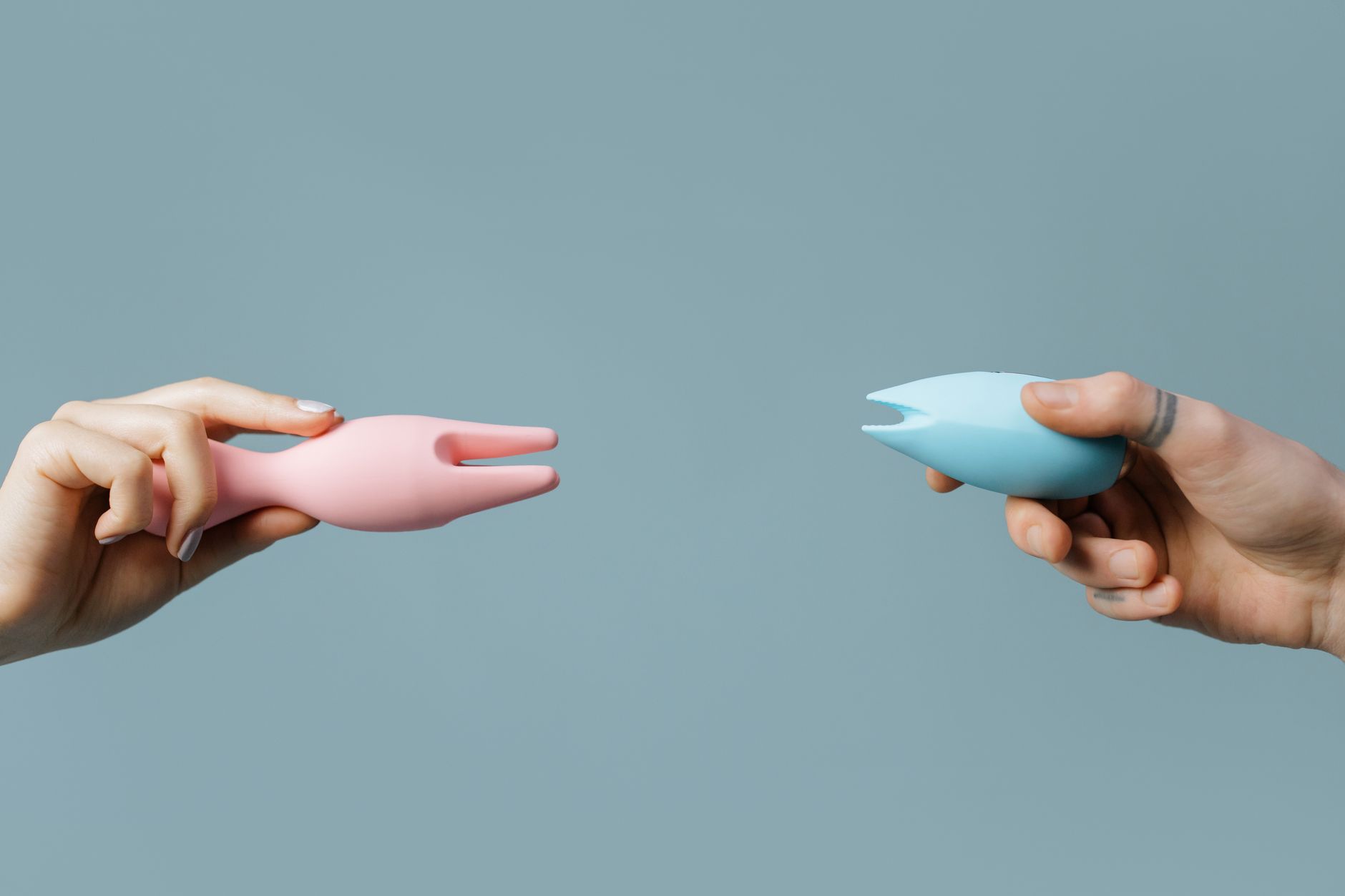
Photo by cottonbro studio on Pexels
The conversation: what to say to your partner
This is where most people get stuck. You can't just start using a lemon vibrator without your partner noticing, and you probably don't want to hide it. But bringing it up when there's already sexual pressure feels dangerous.
Here's what I recommend: choose a moment that's not sexual. Not in bed, not after a rejected advance, not when they're frustrated. Pick a calm Tuesday morning or during a walk. Say something like this:
"I've noticed that when you initiate sex, I shut down. That's not about you. It's about me feeling pressure. I'm realizing I need to spend some time reconnecting with my own desire first, on my own terms. I'm going to explore that with a vibrator by myself for a while. This isn't instead of us. It's so I can actually show up when we do have sex."
Your partner might feel rejected initially. They might think you're choosing the toy over them. That's why the next part matters: tell them what you need from them. "I need you to not ask for sex for the next two weeks. I need you to let me initiate when I'm ready. And I need to know that you're okay with that." This isn't punishment. It's pressure relief.
Many partners are relieved to hear this. The pursuit-withdraw cycle is exhausting on both sides. They're tired of being rejected. You're tired of being asked. Breaking the pattern helps everyone.
When arousal starts returning: using a lemon vibrator with your partner
This takes time. Maybe two weeks. Maybe a month. The timeline depends on how long the pressure cycle has been running and how deep the resentment goes.
When you start feeling interested in sex again, you'll notice it. Maybe you think about your partner during a solo session. Maybe you imagine them there. That's the signal to bring them into the picture.
Start small. You might use your lemon vibrator during sex while your partner is inside you or touching you elsewhere. This keeps you in control of your own stimulation while staying connected. Many people find that having this control actually makes them more present and more interested, because they're not anxious about whether they'll orgasm on your partner's timeline.
Alternatively, your partner can simply be in the room while you use the vibrator solo, watching but not directing. This is vulnerable, but it's also incredibly intimate. Your partner gets to see what actually turns you on, without pressure to perform or produce a specific outcome.
The lemon clitoral vibrator's precision is key here. It doesn't require as much foreplay as other toys. It doesn't need the same rhythm that hands or bodies do. You can use it for three minutes or thirty. Your partner can adjust their involvement without it throwing off your experience.
Managing the self-doubt that shows up
Here's what usually happens next: you start feeling guilty. "My partner is so patient. I'm being selfish. I should just push through and want sex."
Stop. This thought is the pressure coming from inside your own head. You are not selfish for needing to reclaim your arousal. You are not broken for shutting down under pressure. You are protecting yourself, and that's exactly what healthy bodies do.
The only way through the guilt is to get curious about it. Journal about it. Bring it to therapy if you have one. But don't let it convince you to abandon the process. Using a lemon vibrator to reclaim your desire isn't cheating on your partner. It's the opposite. You're doing the work so you can actually be present when you're together.
When this pattern runs deeper
Sometimes partner pressure isn't just about initiation frequency. Sometimes it's about a partner who sulks when rejected, or who makes you feel responsible for their emotional state, or who says things like "I guess you don't find me attractive anymore." That's different. That's emotional coercion, and a vibrator won't fix it.
If your partner is manipulating you with sex or making you feel bad about your boundaries, the issue isn't your arousal. It's the relationship dynamic. A lemon vibrator is a tool for reclaiming your pleasure. It's not a band-aid for a relationship that needs real repair. In that case, you might need couples therapy or individual therapy before anything changes.
But if the pressure is just... standard relationship friction, where your partner wants more sex and you've lost interest? This approach works.
FAQ
How long does it take to feel aroused again after using a lemon vibrator solo?
There's no standard timeline. Some people feel the shift within a few days. Others need a few weeks. It depends on how long the pressure cycle has been going and how much resentment has built up. The key is consistency. Using your lemon clitoral vibrator regularly trains your nervous system that arousal is something you control, not something that happens to you on someone else's schedule.
Can I use a lemon vibrator if my partner isn't aware I'm doing this?
Technically, yes. But eventually they'll notice. A more useful question is whether you can have this experience without telling them, and the answer is no. The secrecy will add another layer of stress. Better to have the conversation early, set a boundary, and give yourself permission to reclaim your arousal openly. That transparency actually strengthens the relationship.
What if my partner feels threatened by a lemon vibrator?
Many partners do initially. They think the vibrator means you don't want them anymore, or that you're comparing them unfavorably. Have that conversation directly. "This isn't about you. This is about me accessing my own body. It helps me want you more, not less." If they remain threatened after you've explained, that's worth exploring in couples therapy, because the issue isn't the toy. It's insecurity or control dynamics that the toy is just making visible.
Should I hide the lemon vibrator or keep it visible?
Keep it visible. The secrecy is part of the shame cycle that's already affecting your arousal. Normalizing the toy in your relationship normalizes pleasure itself. It says to your partner and to yourself: my desire matters, and I'm allowed tools to access it.
What if using a lemon vibrator alone makes me feel more disconnected from my partner?
That usually means you're using the vibrator to escape the relationship rather than to reclaim your desire. There's a difference. One is self-care. The other is avoidance. If you notice yourself feeling less interested in your partner the more you use the toy solo, that's a signal that the relationship itself might need attention, separate from the arousal question.
Can I use a lemon vibrator to speed up my arousal so my partner doesn't feel rejected?
No. That's still putting your partner's timeline first. The whole point is to stop doing that. If you're using the vibrator to perform arousal instead of accessing real arousal, you're just adding another layer of pressure. Use it for you, not for them.
The reset button exists
Partner pressure doesn't have to be permanent. Your arousal can come back. A lemon vibrator isn't the cause of your disconnection from desire. It's permission to spend time reconnecting, on your own terms, without an audience.
Start alone. Stay consistent. Have the conversation with your partner. And give yourself weeks, not days, to feel the shift. Arousal isn't something you can force or rush. But you can absolutely create the conditions for it to return.
When you're ready to talk through relationship dynamics that are affecting your pleasure, reach out to Hello Nansy. We're here to help.
Sources
Bach, B., Mortensen, E. L., & Simonsen, E. (2016). Psychometric properties of the Experiences in Close Relationships—Revised (ECR-R). Journal of Personality Assessment, 98(1), 57-65.
Breuner, S. J., & Linden, W. (2005). Trait anger and inadequacy in response to acute conflict. Journal of Research in Personality, 39(3), 369-391.
Dubé, L., Jutras, M. A., & Boucher, S. (2016). Perceived partner responsiveness and sexual desire in long-term relationships. The Journal of Sex & Marital Therapy, 42(7), 598-609.
Gottman, J. M., & Levenson, R. W. (2002). A two-factor model for predicting when a couple will divorce: Exploratory analyses using 14-year longitudinal data. Family Process, 41(1), 83-96.