Let's be real about simultaneous orgasm
The movies lied to you. Synchronized climax is marketed as the gold standard of partnered sex, but here's the truth: it's statistically rare, often awkward when it does happen, and genuinely not necessary for amazing sex. Most people with partners finish at different times. Most people don't even realize this is completely normal.
This is one of the most common invisible conflicts in relationships. Partners blame themselves, worry they're doing something wrong, or start resenting the mismatch. Meanwhile, the actual solution is simple and involves understanding that bodies don't work on the same timer.
Why the timeline mismatch happens
Physiologically, there are about five big reasons orgasms don't sync:
Different sensitivity profiles. One partner might need consistent indirect stimulation while the other responds to rhythm changes. One person climaxes from clitoral contact alone; another needs internal pressure. These aren't compatible unless one person is performing a compromise their body doesn't naturally want.
Arousal ramp speed. Some people's nervous systems build slowly and steadily. Others spike fast, plateau, then surge. If your partner takes 8 minutes to reach orgasm and you take 12, you're working against biology, not laziness.
Attention distribution. During partnered sex, one person is often managing their own sensation while also focusing on their partner's pleasure. That mental load slows orgasm for most people. The other partner might be receiving stimulation without that cognitive overhead, finishing faster.
Hormonal cycles. If you menstruate, orgasm speed varies across your cycle by 30 to 50 seconds, sometimes more. Your partner's hormones work on a different pattern entirely. You're rarely on the same phase.
Medication and neurological factors. Antidepressants, antihistamines, some blood pressure medications, and conditions like ADHD genuinely change orgasm timing. This isn't performance anxiety. This is medicine.
None of this means anything is broken. It just means your bodies are different, and expecting them to align on command is like expecting two people to fall asleep at the exact same second.
The actual cost of chasing sync
Here's the part nobody talks about: forcing synchronized orgasm often means someone is white-knuckling through discomfort to match someone else's timeline.
One partner holds back their orgasm because they climax faster, creating tension and numbness. The other partner pushes hard to speed up, adding anxiety that actually makes orgasm harder. Or one person fakes it to end the session. All three of these reduce pleasure and erode trust.
I've worked with hundreds of couples, and the moment they stopped chasing sync and embraced their actual rhythm, the sex got better immediately. Not just more frequent. Genuinely better, because both people were actually present instead of performing.
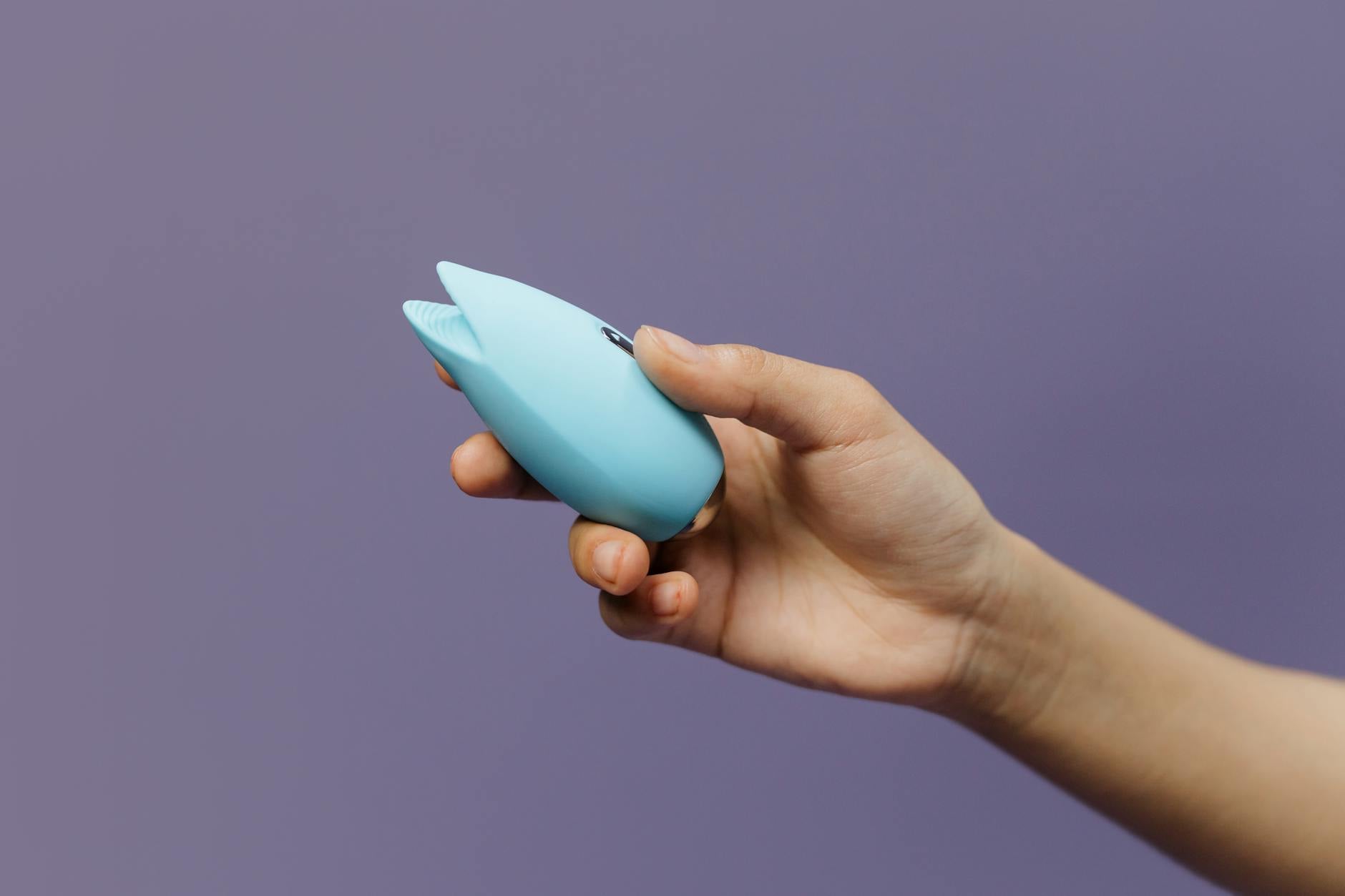
Where lemon clitoral vibrators change the game
A lemon vibrator, or any clitoral vibrator, doesn't care about timing. It doesn't get tired. It doesn't perform. This means:
One person can stay engaged while the other finishes separately. If you climax first, your partner can use a lemon vibrator on their own terms while you're present, holding them, kissing them, watching. That's not a consolation prize. That's intimacy with agency.
External stimulation means less dependence on what the partner is doing. This sounds mechanical, but it's actually liberating. You're not both trying to coordinate positioning and rhythm. One person can focus fully on internal sensation while the other uses external suction stimulation from a lemon clitoral vibrator at exactly the pace their body needs.
Orgasm becomes optional rather than obligatory. With a vibrator in the equation, you can finish fast or slow or not at all, and it feels like choice, not failure. That psychological shift makes actual orgasms more likely, not less.
The person with slower orgasm response doesn't have to worry they're holding the other back. This guilt is widespread and toxic. A lemon vibrator removes the comparison entirely. Your partner is using a toy. You're doing your own thing. No one is waiting or frustrated.
How to actually use a lemon vibrator when orgasm timing differs
Start the conversation outside the bedroom. Not during sex. Not while clothes are off. Sit down and say something like: "I've noticed we don't usually climax at the same time, and I think I've been stressed about that. I don't think we should be. Can we talk about what actually feels good to each of us?" Most partners will feel relief, not rejection.
Establish who typically finishes first. This isn't about ego. It's practical data. If you climax first, you both know you'll likely need something different for the second person to finish without pressure.
Agree that the slower-to-orgasm person gets first choice of tool. A lemon clitoral vibrator works brilliantly for this. The person who naturally takes longer uses the vibrator while their partner is present, engaged, not performing. This usually means 3 to 5 extra minutes of active sex, which is way less awkward than the waiting-and-stopping dance most couples do.
Start using the vibrator earlier than you think you need it. Don't wait until one person is done and the other is left hanging. Introduce it when you're both getting close, so it's part of the shared experience, not a rescue tool. This changes the psychological frame from "something went wrong" to "we're both getting exactly what we need."
Let the partner who needs more time control the intensity. This is crucial. If you're using a lemon vibrator on your partner, start at a lower setting and let them guide the pace. They know their body. The vibrator is just the vehicle.
Don't make it the whole event. A lemon clitoral vibrator is a tool, not a replacement for the partnership. You can still be inside your partner. You can still kiss them. The vibrator is just solving the stimulation mismatch while you're both present.
The emotional piece that matters more than the mechanics
Here's what I see happen most: once a couple uses a vibrator for this specific problem, they realize the issue was never the timing. The issue was shame about the timing. They thought something was wrong with their body or their partner's body.
A lemon vibrator makes the timeline difference feel like logistics, not failure. And once you're not ashamed, the sex actually becomes what it always could have been. Slower. More relaxed. More present.
The best orgasms aren't simultaneous. They're the ones where both people are actually there, not performing.
Common questions about vibrators and orgasm timing
Can using a vibrator make me dependent on it for orgasm?
No. Vibrators don't rewire your nervous system. They're a different sensation, which is sometimes exactly what your body needs. Many people use vibrators during partnered sex and have orgasms just fine without them at other times. Think of it like the difference between coffee and tea. Neither one trains your body to reject the other.
What if my partner feels threatened by a clitoral vibrator?
This usually means he (or they) thinks the vibrator is a substitute for him. It's not. You're literally asking for help with a physiological difference that has nothing to do with how much you want him. Try framing it as: "This isn't about you. This is about my body needing something I can't get from penetration alone. It's not replacement. It's addition." That conversation matters way more than the vibrator itself.
Does using a lemon vibrator mean we have bad chemistry?
No. The opposite often. Chemistry is partly about desire, but it's also about comfort and honesty. Couples who can say "our bodies have different timelines and that's fine" have better chemistry than couples white-knuckling through fake simultaneous orgasm. The tool just makes the honesty easier.
Should we always use a vibrator, or just sometimes?
Just when it solves a specific problem. Some sessions you might not need it. Other times it's perfect. You're not locked into anything. The goal is flexibility and presence, not consistency.
How do I know if we're using the vibrator wrong?
You'll feel disconnected or rushed. If the vibrator feels like it's replacing intimacy instead of supporting it, pause and reconnect. Use it during times when you're already close, not as the main event. And if one partner is doing all the work while the other is passive, you've lost the point. Everyone should be present.
Can a lemon vibrator help if one of us has medication side effects on orgasm?
Often, yes. Antidepressants and antihistamines can delay orgasm significantly. A vibrator can sometimes give your nervous system the extra input it needs to cross the finish line. But this is also worth mentioning to your doctor. Sometimes a small dose adjustment or timing change helps too.
Here's what actually matters
You don't need simultaneous orgasm. You need honesty about what your bodies actually do, permission to be different, and tools that make those differences feel like features, not bugs.
A lemon clitoral vibrator solves this exact problem because it removes the performance from the equation. You're not waiting. You're not rushing. You're both getting what you actually need.
That's not a compromise. That's partnership. And it feels completely different.
If you're curious about how a lemon vibrator might fit your specific situation, reach out at the link below. We're here to help you figure out what actually works for your bodies.
Meanwhile, let go of simultaneous orgasm. Let go of the idea that your timelines should match. Your bodies are different. That was always the point. A lemon clitoral vibrator just makes it easier to celebrate that instead of fight it.