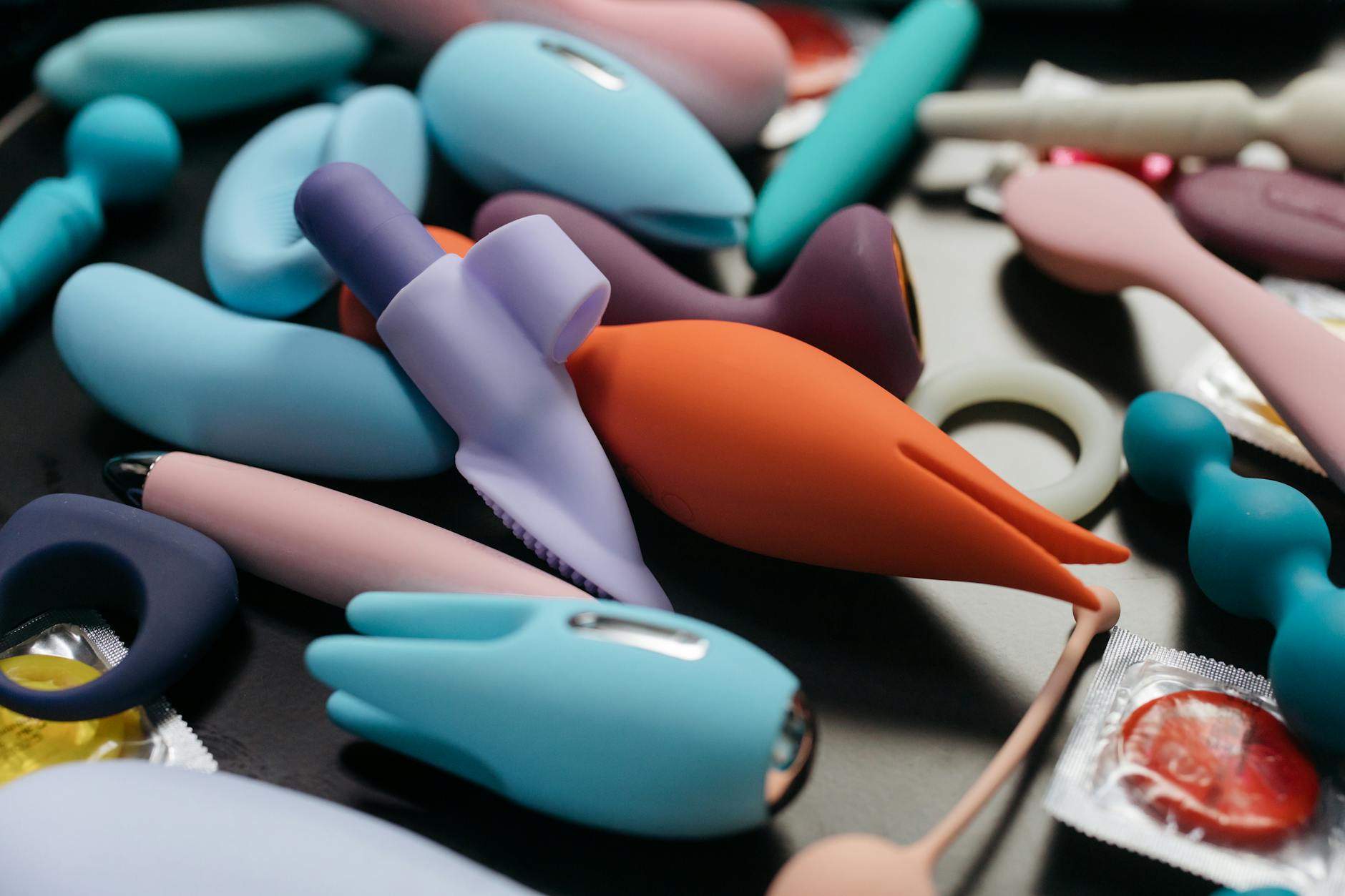
Why couples avoid toys (and why that's changing)
Here's the thing. Most couples don't introduce toys because they're afraid of what it means. Not what it feels like. What it means. Will it hurt his confidence? Will she think I'm not enough? What if it makes things weird?
I've spent years listening to couples navigate this exact friction point, and the answer is always the same: the toy isn't the real conversation. The fear of not being enough is. And that's precisely why lemon vibrators, especially clitoral suction toys like Hello Nancy's Lem, work so well for couples. They sidestep the performance anxiety entirely.
When a partner introduces a lemon clitoral vibrator to shared pleasure, it changes the dynamic from "am I doing this right" to "let's explore this together." That reframe matters more than any pattern or intensity setting.
The performance pressure problem (and how suction helps)
Most partnered sex involves someone trying to make someone else come. That's the baseline expectation, and it's a silent source of anxiety for both people. The partner with the vulva is wondering if they're taking too long. The partner without one is wondering if their technique is good enough. Nobody's actually present. Everyone's keeping score.
Traditional vibrators intensify this dynamic. You add a basic bullet vibrator, and now it's still about making someone climax faster, except with a gadget. The pressure doesn't disappear. It just relocates.
Lemon suction toys work differently. A clitoral vibrator that uses suction instead of direct vibration creates a sensation that's physically distinct from what a partner's hands or body can provide. This is crucial. It's not a replacement for partnered touch. It's a different thing entirely, which means the partner using it doesn't feel like they're being "helped along" by a better version of someone's finger. They feel like they're exploring something new together.
That distinction removes shame. And when shame leaves the room, presence arrives.
Starting the conversation (without it being awkward)
The way most couples bring up toys is backwards. They make it about want. "I want to try a lemon vibrator." That triggers the comparison anxiety immediately. Instead, frame it as curiosity about sensation.
"I read that clitoral suction feels really different from anything else. Want to explore that together?" This positions the toy as discovery, not as a critique of what you already do.
If your partner is nervous, start by using it solo while they're present. Not as a show, but as a shared moment. Let them watch, ask questions, hold you. This normalizes the object before it's part of partnered activity. Most people relax significantly once they see that the toy doesn't steal the moment. It becomes part of it.
Honestly, the best opener is just honesty. "I'm curious. I'm also a bit nervous because I don't want you to feel like I'm saying you're not enough." Then listen to what they say. Half the time, they've been thinking about adding something too and just didn't know how to bring it up.
What lemon vibrators do for partnered pleasure specifically
Clitoral suction toys have three advantages in partnered sex that traditional vibrators don't offer.
First, reduced sensitivity burnout. When someone uses a basic vibrator for extended partnered play, numbness often sets in. That means intensity keeps escalating, which can pull focus away from the partner and onto the device. Lemon sexual toys use suction, which stimulates differently and preserves sensitivity longer. This keeps the experience grounded in shared time, not chasing sensation.
Second, hands stay free. With a traditional vibrator, one person is holding something. With a lemon clitoral vibrator like the Lem, it stays in place through suction contact. This means both partners have hands available for touching, holding, exploring other parts of the body. The toy becomes a shared tool, not something one person is operating while the other waits.
Third, it actually slows things down. Suction sensation is subtly different from vibration. People often want to pause and savor it, which naturally creates moments of presence instead of goal-focused rushing. You're not racing to an orgasm. You're discovering what this sensation feels like. That's fundamentally different energy.
The first time using a lemon vibrator together
If you've decided to introduce a lemon clitoral vibrator to partnered play, here's what actually helps.
Start with the lowest setting. The Lem and other Hello Nancy clitoral vibrators have pattern options, and the instinct is always to jump to the one that feels most intense. Don't. Begin where you'd begin with any new sensation. You can always turn it up. You can't unknow what intensity 7 feels like.
Keep conversation loose. "How's that feel?" is enough. You don't need to narrate. You don't need to make it mean something. Just observe together. Some people find they prefer a specific pattern. Some prefer suction alone without vibration. Others want the exact combination of suction and pattern that they'll use forever. All of that is normal, and none of it says anything about your partnership.
If orgasm doesn't happen the first time, that's not a failure. You're building a new neural map, and that takes a few sessions. The point of the first time is to confirm that the toy doesn't create distance. Spoiler: it doesn't. It creates collaboration.
How lemon vibrators change what "foreplay" means
Most couples have a pretty rigid foreplay structure: kissing, touching, oral sex, penetration (or whatever their rhythm is). Introducing a lemon clitoral vibrator often reshapes that entire sequence because it opens new possibilities.
Some couples use a clitoral vibrator during penetration, which adds dual sensation that neither person can create alone. Some use it before penetration, which increases arousal and changes how the body responds. Some use it instead of penetration on nights when that feels better. The point is: you get options.
What I've noticed in couples who've integrated lemon suction toys is that they talk more about what they want. Not in a clinical way. Just naturally. "Want the Lem tonight?" becomes as normal as "want to try a new position?" And once pleasure becomes something you discuss without shame, everything else in the relationship tends to get easier to talk about too.
When lemon vibrators help with desire mismatches
One of the most common challenges I see in long-term partnerships is when desire levels shift. One partner wants sex more often. One wants it less often. One wants longer sessions. One wants quicker ones. These mismatches are normal, but they create tension because someone usually ends up feeling like they're settling or performing.
A lemon clitoral vibrator can actually help here. If one partner has lower desire, they might feel more interested in shared pleasure if the experience involves discovery instead of repetition. If one partner has higher desire, they might feel more satisfied if the sessions go deeper rather than longer. The toy becomes a tool for meeting in the middle.
It also removes some of the pressure from whoever doesn't have the higher drive. "Let's use the Lem" feels collaborative instead of like one person is being asked to perform for the other. That's a subtle shift, but it matters.
Practical logistics (because they matter)
When you're using a lemon adult toy with a partner, a few things genuinely help.
Keep it charged and accessible. Nothing kills spontaneity like fumbling for a charger mid-moment. The Lem holds a charge well, but stay on top of it.
Use water-based lubricant with your lemon vibrator. Not because you need it for sensation, but because it reduces friction and makes the seal better for suction. Silicone-based lubes can damage silicone toys, so stick to water.
Wash it before and after. This takes 30 seconds and makes the whole experience feel intentional instead of rushed.
Talk about storage somewhere neutral. Not hidden. Not visible. Just neutral. This removes the subconscious message that pleasure is something to be ashamed of.
When a lemon vibrator heals disconnection
I've worked with couples who've grown distant not because they don't love each other, but because partnered sex became a source of anxiety instead of connection. Usually, there's a specific incident. Someone didn't orgasm. Someone made a comment. Someone's body changed. And now sex is fraught.
Introducing a lemon clitoral vibrator in this context can actually help reset the relationship because it creates a completely new context for pleasure. You're not trying to fix what wasn't working. You're building something different. That fresh start can be exactly what a couple needs to reconnect.
The toy isn't the healing. The willingness to explore together is. But the toy makes that willingness feel safer, because it removes the direct comparison to what came before.
FAQ: Couples and clitoral vibrators
Will a lemon vibrator make my partner feel inadequate?
Only if you frame it that way. The real answer: no. Millions of people use lemon sexual toys with partners and feel closer, not more distant. The key is positioning it as exploration, not replacement. If you introduce it as "this is something we want to try," it becomes collaborative. If you introduce it as "you're not good enough," then yes, feelings will hurt. But that's about the conversation, not the toy.
How do I bring it up without killing the mood?
Don't do it mid-sex. Talk about it when you're both clothed and not actively thinking about sex. Make it a conversation, not a proposal. "I read about lemon clitoral vibrators. They use suction instead of vibration. I'm curious. Are you?" Listen. See what they say. If they're hesitant, ask what the hesitation is about. Nine times out of ten, it's the performance anxiety we've already discussed, not actual resistance.
What if my partner says no?
Then you pause. But find out why. Is it performance anxiety? Budget? Physical comfort? Not understanding how it works? Those are all different conversations with different answers. Sometimes a partner needs more time. Sometimes they need a different introduction. Sometimes they need to see that you're not pushing and that you're still attracted to them without it. Pressure makes people dig in. Patience sometimes opens doors.
Can we use a lemon vibrator if we're just starting out as a couple?
Absolutely. Introducing a clitoral vibrator early in a relationship can actually set a healthier tone because neither of you has built years of patterns and assumptions yet. You're starting from a place of curiosity instead of trying to fix something. That's actually ideal.
Do I have to use a lemon vibrator to have good partnered sex?
No. Plenty of couples have incredible sex without any toys. But plenty of couples also discover that adding a lemon clitoral vibrator deepens what they already have. It's not essential. It's optional. And if your partnership is solid, introducing something optional just gives you more ways to explore together.
What if we try it and one of us doesn't like it?
Then you don't use it again. Toys are supposed to add pleasure, not create obligation. If a lemon vibrator doesn't work for you, put it in a drawer and move on. There's no penalty for trying something and deciding it's not your thing. The win is that you tried it together without shame. That matters more than whether you like the specific toy.
One more thing
Intimacy in long-term partnerships isn't about finding the perfect technique or the perfect tool. It's about two people deciding, repeatedly, to show up with curiosity instead of judgment. To explore instead of perform. Lemon vibrators don't create that. But they do give you a framework for it. And sometimes, that's exactly what a couple needs to remember that pleasure, together, is still possible.
If you're curious about trying one, the Hello Nancy website has resources on how to use clitoral vibrators and why they feel different. Start there. Then have the conversation. The tool matters less than the willingness to talk about wanting more together.