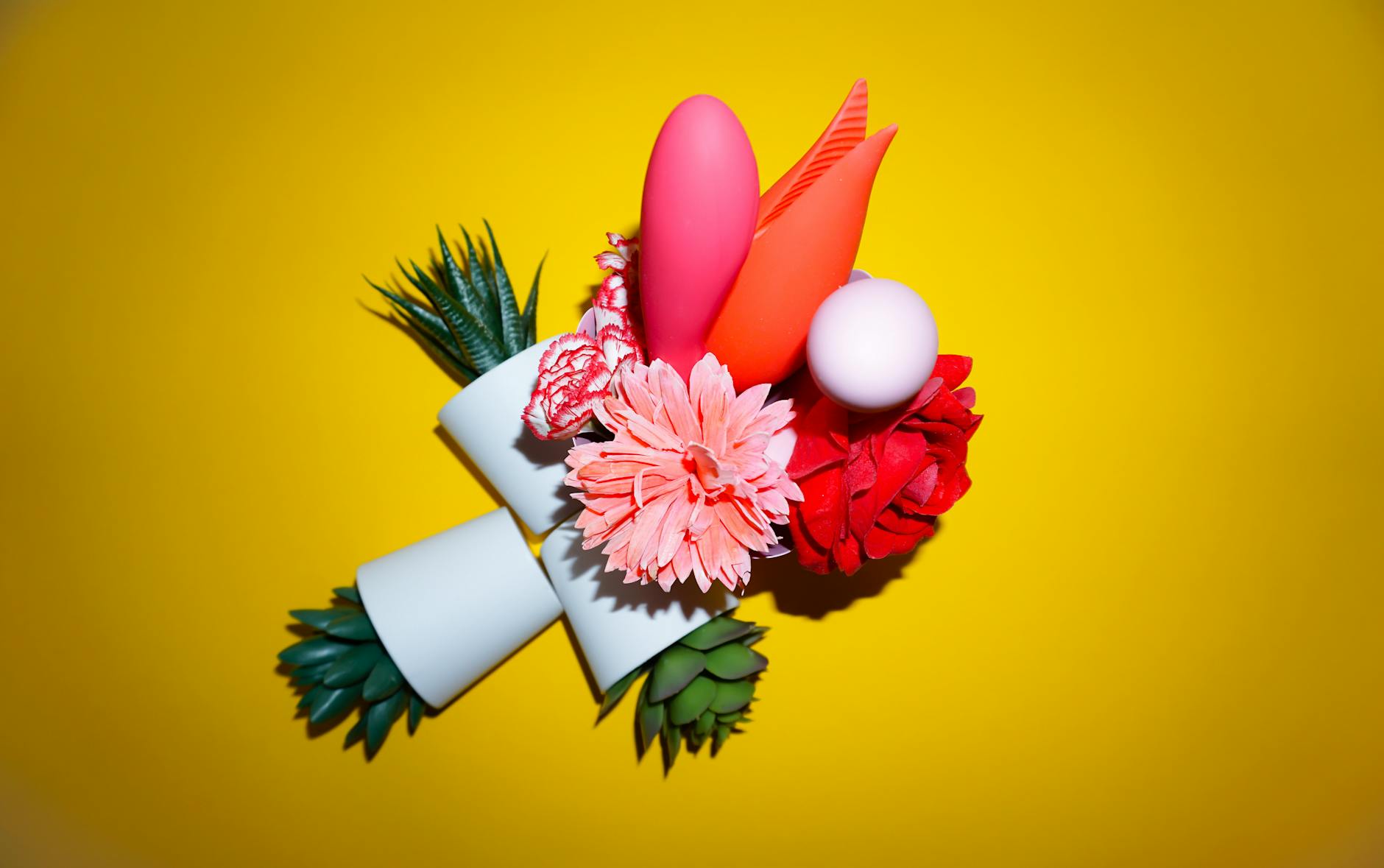
Let's talk about your cycle and your clitoris
If you've ever noticed that the intensity you loved last week suddenly feels like too much this week, you're not imagining it. Your clitoral sensitivity genuinely shifts across your menstrual cycle. Estrogen, progesterone, and testosterone all swing in predictable patterns, and that directly affects nerve sensitivity, blood flow, and how your body responds to stimulation.
Most people with cycles don't realize this is happening, so they either blame themselves ("Why am I not in the mood?") or blame their lemon vibrator ("It stopped working"). Neither is true. Your body is just doing what it's designed to do. The trick is learning to work with it instead of against it.
How hormones reshape sensitivity across four phases
Your cycle isn't one constant state. It's four distinct phases, each with its own sensory profile.
Menstruation (days 1-5). Estrogen and progesterone are both at their lowest. Blood flow to the pelvic floor increases. Many people feel more sensitive during this phase. A lemon vibrator on pattern 1 or 2 can feel more intense than usual. Some people find this is when they have their easiest, most reliable orgasms. Others prefer to skip stimulation entirely. There's no universal rule. The key is paying attention to what your body wants right now, not what it wanted three weeks ago.
Follicular phase (days 5-13). Estrogen is climbing. Sensitivity is moderate but improving. This is when clitoral tissue is thickening slightly, blood flow is increasing, and your nervous system is getting primed. You'll likely tolerate higher intensities now. This is often when people feel ready to experiment with intensity levels they found uncomfortable earlier in the month.
Ovulation (days 13-15). Peak hormones. Your clitoris is actually more engorged and responsive at this moment than at any other time in your cycle. Testosterone is elevated. Blood flow is at its maximum. You can typically handle the strongest settings on your lemon vibrator. If you're someone who struggles with orgasm, ovulation week is often when it feels easiest. This is not a coincidence.
Luteal phase (days 15-28). Progesterone rises, estrogen dips. This is when many people feel oversensitive. What felt perfect during ovulation might now feel sharp or uncomfortable. Some people need to back down to pattern 1 or use a water-based lubricant as an additional buffer. Others want shorter sessions or a wider pressure point. Pay attention to whether you prefer a gentler suction intensity or if you need to increase the gap between your body and the tip of your lemon clitoral vibrator.
Tracking what changes so you actually know
Here's the hard part: you have to pay attention. I know that sounds obvious, but most people cruise through their cycle without noticing the shifts because they're not consciously checking. Then a new partner arrives, or they get a new toy, and suddenly they think something's wrong.
Grab a notes app or a period-tracking app and do this for two months. Each time you use your lemon vibrator, jot down three things: the day of your cycle, which pattern you used, and how it felt (comfortable, too intense, perfect, numb, etc.). You don't need prose. "Day 8, pattern 2, good" is enough.
After two cycles, patterns emerge. Most people discover they have a "goldilocks" week and a "too much" week. Some realize they feel least sensitive on day 2 of menstruation but most sensitive on day 14. Others find the luteal phase is when they need slower patterns but longer sessions. Your cycle isn't generic. Once you've mapped yours, you can stop guessing and start adapting.
Practical adjustments for each phase
When sensitivity is high (menstrual and ovulation weeks). You're ready for intensity. Patterns 4 and 5 on your lemon vibrator likely feel great. You can also reduce lubrication if you typically use it. Dry stimulation will feel more direct. Some people like to spend less time building up and more time at the peak sensation. Sessions might be shorter because you reach orgasm faster. This is efficiency, not a problem.
When sensitivity is moderate (follicular phase). This is your experimental window. Patterns 2-4 feel accessible. Try varying the angle of your lemon clitoral vibrator. Shift the contact point slightly off-center instead of always hitting the head directly. Use a tiny bit of water-based lubricant and notice how it changes the sensation. This is a good phase to learn new techniques because your body isn't hypersensitive and isn't numb either.
When sensitivity is low or inconsistent (luteal phase). Add texture and time. Water-based lubricant becomes your ally. It changes the sensation from direct pressure to a gliding movement. Extend your warm-up time to 15-20 minutes instead of 10. Use pattern 1 or 2 and let your body catch up. Some people find that adding a small vibrator to a different area at the same time helps. If you have a partner, this is when penetration alongside external stimulation with your lemon vibrator can bridge the gap. The key is patience and permission to adjust.
The role of hormonal birth control
If you're on hormonal birth control, your cycle is chemically flattened. Estrogen and progesterone don't swing. This means your clitoral sensitivity stays relatively stable across the month. That's useful information. You don't need to track weekly shifts because they're minimal.
However, some people on hormonal birth control report that their baseline sensitivity is lower than it was off hormones, or that their optimal patterns have shifted. If you came off birth control recently, don't panic if your clitoris suddenly feels different. It takes 2-3 months for your natural cycle to reset fully. Give yourself grace and time.
Stress, sleep, and the wildcard factor
Hormones aren't the only thing that changes sensitivity. Stress, sleep, hydration, caffeine, and where you are in your work week all matter. A stressful Tuesday on day 12 of your cycle might feel different from a relaxed Saturday on day 12.
The best mindset is flexibility. Your lemon vibrator has five patterns for a reason. Sometimes you'll use pattern 2, sometimes pattern 4, sometimes you'll put it down entirely and do something else. This isn't failure. This is tuning in. The more you accept that your body is variable, the less frustrating the variation becomes.
When to see someone if sensitivity feels wrong
There's variable sensitivity. Then there's something else. If you've tracked two full cycles and find that you're never comfortable, or if sensitivity changes happened suddenly when nothing in your life changed, that's worth discussing with a healthcare provider. Sometimes hormonal birth control side effects, thyroid issues, or other medical factors are affecting sensation. You deserve to feel good.
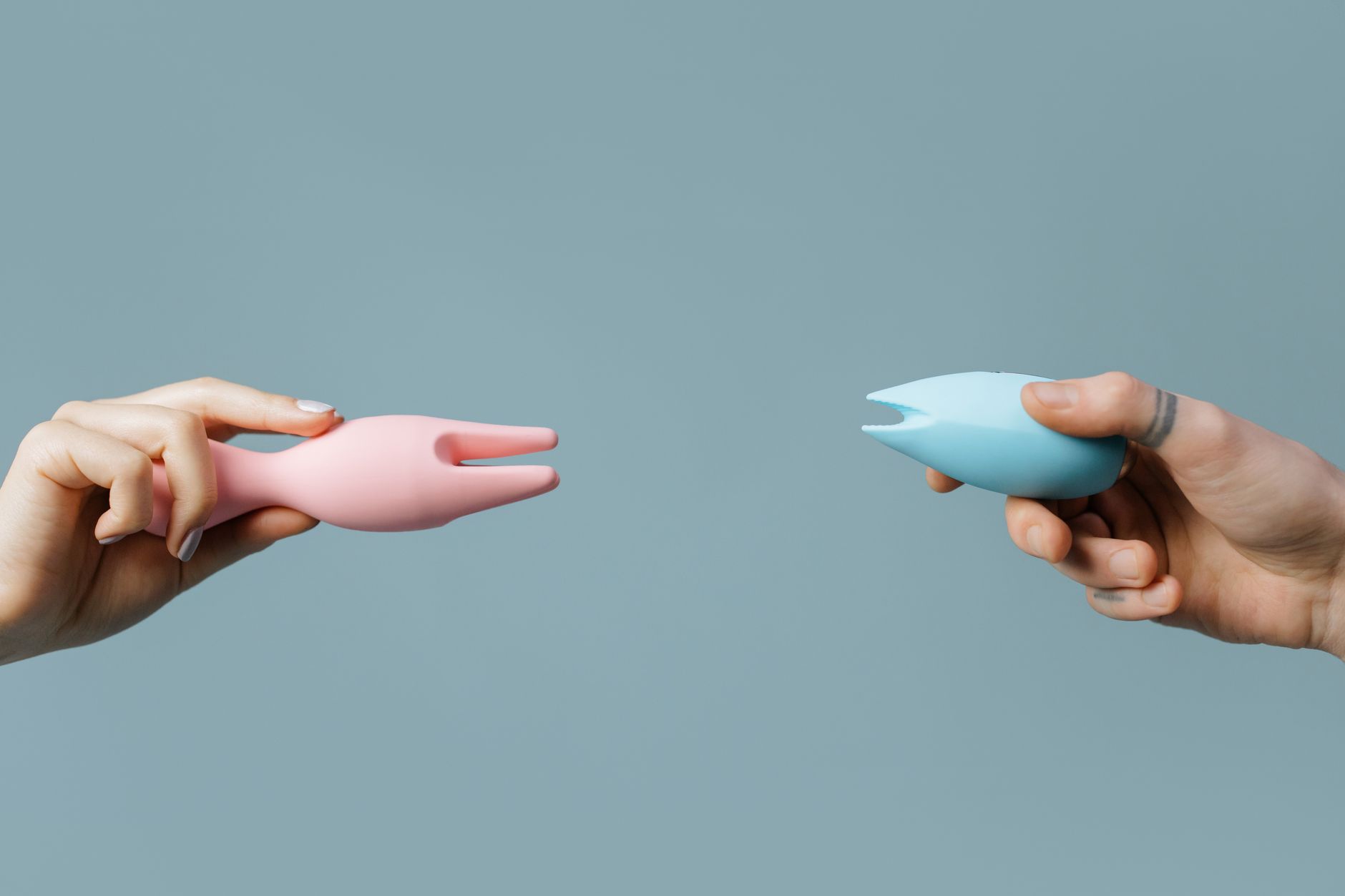
Photo by cottonbro studio on Pexels
Similarly, if you're new to lemon vibrators and don't know your baseline yet, check out our guide on why lemon vibrators work better for first-time toy users over 35. Understanding what "normal" feels like for you makes tracking changes much easier.
Quick settings reference for your lemon vibrator
Here's a cheat sheet. Print this or screenshot it. Refer to it while you're learning your own pattern.
Menstrual phase. Start at pattern 1 or 2. Increase if needed. Sessions often end quickly.
Follicular phase. Try patterns 2-4. This is your test week. Vary angle and lubrication.
Ovulation. Go bold. Patterns 4-5 are usually comfortable. Lubrication optional.
Luteal phase. Pattern 1-2 with water-based lubricant. Extend time. Patience matters.
Your clitoris is intelligent. It's communicating all month. You're just learning its language.
FAQ
Can my period tracker tell me when sensitivity will peak?
Your tracker tells you the day of your cycle, which is helpful. But sensitivity peaks vary by person. Some people peak on day 14 (ovulation). Others peak earlier or later depending on their individual hormone profile. Use your tracker to note the day, then track the sensitivity separately so you can see which days of your cycle match your sensory needs. Two cycles of data is usually enough to spot the pattern.
Does lube change how a lemon clitoral vibrator feels?
Completely. Water-based lubricant transforms a lemon vibrator from sharp pressure to a gliding sensation. During high-sensitivity weeks, less or no lube gives a more direct feel. During low-sensitivity weeks, lube makes the sensation more noticeable without feeling raw. Silicone-based lubes feel richer but can damage silicone toys, so stick to water-based with your lemon sucker. This is one of the easiest ways to adjust sensation without changing vibrator intensity.
What if my sensitivity never stabilizes, even after tracking two cycles?
That's worth investigating. Variable sensitivity month to month can indicate thyroid issues, nutrient deficiencies, or medication side effects. If you're also noticing changes in mood, energy, or menstrual flow, see a healthcare provider. Clitoral sensitivity often mirrors overall hormonal health. Addressing the underlying issue usually helps sensation normalize.
Is it normal to want different things each time I use my lemon vibrator?
Completely normal. You're not broken or indecisive. You're responsive. Your body changes minute to minute based on stress, arousal, what you ate, whether you slept well. The cycle shifts are just the bigger waves underneath those smaller ripples. The more you stop expecting consistency, the more pleasure you'll actually get.
Can I use the same lemon vibrator pattern throughout my cycle if I adjust lubrication and time?
Absolutely. Some people love pattern 3 and never want to change it. They just use less lube in high-sensitivity weeks and more lube in low-sensitivity weeks, or they adjust duration instead of intensity. There's no law that says you have to shift patterns. If one feels right, use that one and adjust everything else around it.
Does hormonal birth control affect how my lemon adult toys feel?
Yes. Hormonal methods flatten your cycle, so you won't experience the dramatic weekly shifts described above. Your sensitivity stays more constant. Some people on hormonal birth control report their baseline sensitivity is lower overall, while others report it's higher. If you switch birth control or go off it, give yourself 2-3 months to feel how your sensitivity restabilizes before assuming your clitoris has permanently changed.
The bigger picture
Your cycle isn't a bug. It's the software. Learning to use your lemon vibrator when desire fluctuates mid-cycle is part of understanding how your body actually works. The bonus is that once you tune in to your sensitivity shifts, you stop blaming yourself when pleasure feels harder some weeks. You also stop being surprised when it feels easy.
Your body is doing exactly what it's supposed to do. Your job is paying attention and adjusting your lemon clitoral vibrator settings to match. That's not compromise. That's honoring how you actually work.