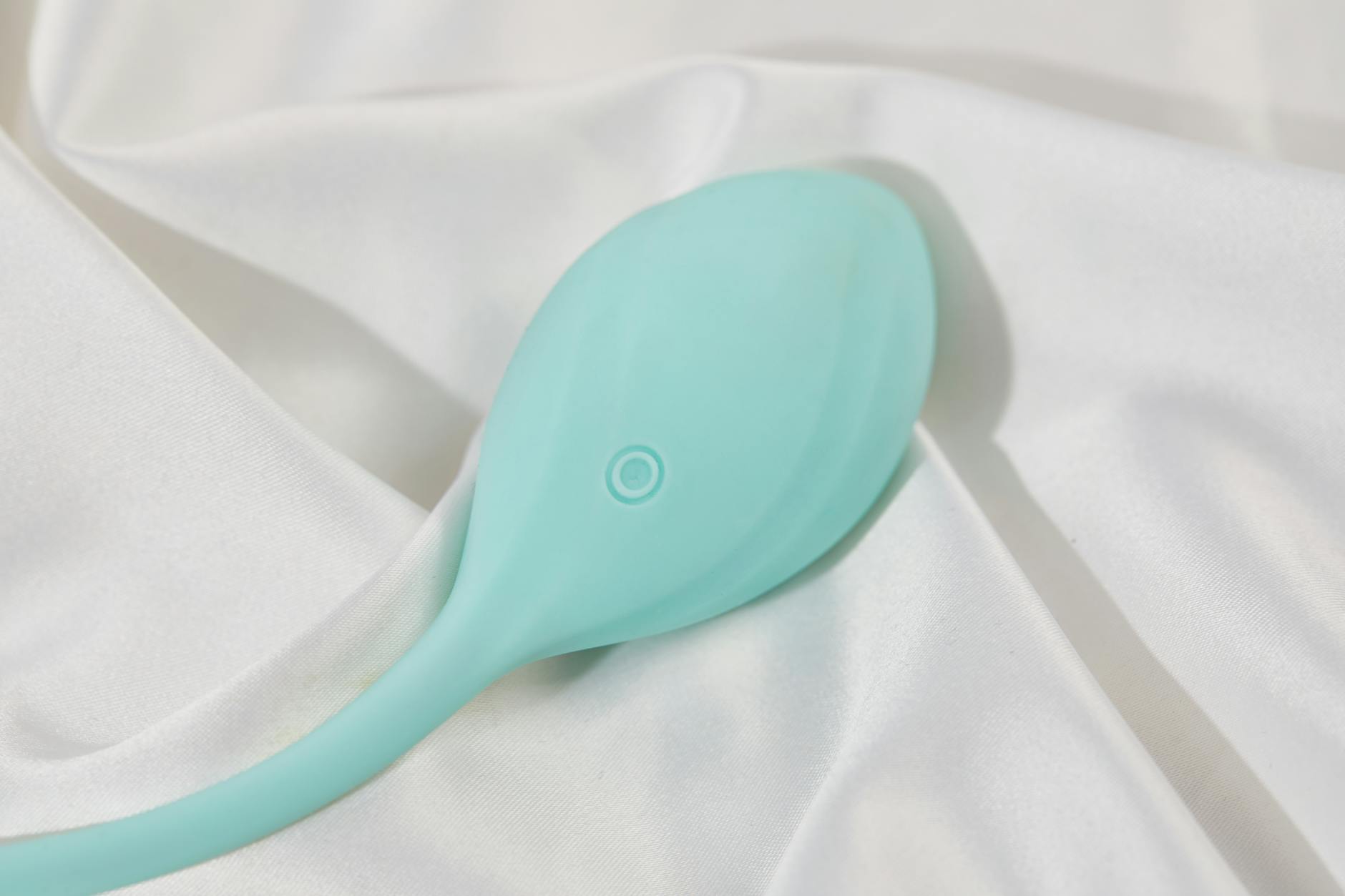
Let's start with what your cycle actually does to your body
Your hormones don't just show up once a month. They're cycling constantly, shifting your arousal, sensitivity, and how fast your body responds to stimulation. If you've ever noticed that some days a lemon vibrator feels incredible and other days it feels meh, your cycle is probably the culprit. Most people aren't taught this, so they assume something's broken. Nothing's broken. Your body's just speaking a different language each week.
Here's the thing: understanding your cycle's effect on pleasure isn't about optimization or productivity. It's about meeting yourself where you actually are instead of expecting the same response every single day.
How your cycle changes sensitivity and arousal
Estrogen rises after your period and peaks around ovulation. When estrogen is high, your skin becomes more sensitive, blood flow increases to your genitals, lubrication comes easier, and arousal builds faster. That's roughly days 8 to 14 of your cycle for most people. A lemon clitoral vibrator's suction feels more intense. Your orgasms may build quicker. Some people can orgasm from settings they'd normally skip.
Then comes the luteal phase. After ovulation, progesterone rises and estrogen dips. Blood flow to your genitals actually decreases. Arousal takes longer to kick in. You might need more warm-up time, higher intensity settings, or more direct stimulation to feel the same response. This is also the phase where you might feel more emotionally vulnerable or protective of your energy, which affects desire itself.
During menstruation, hormones drop sharply. Some people feel numb or disconnected. Others report that increased pelvic blood flow during their period makes orgasms feel deeper or more satisfying. There's no universal answer here. Your experience might shift year to year depending on stress, sleep, or what's happening in your relationship.
What to do in the follicular phase (post-period to ovulation)
This is when pleasure often feels easiest. Your body is naturally primed for arousal. If you're using a lemon vibrator, you might notice you can handle higher intensity settings without discomfort. The suction feels more manageable. You might orgasm faster than usual.
Here's what I recommend: go ahead and explore. Try pattern 4 or 5 if you normally stick to 2 or 3. Extend your session longer than usual and see if you can build to multiple orgasms. This is the phase where many people discover they actually enjoy more intensity than they thought, but they were only testing during their luteal phase when sensitivity was lower.
Don't assume your baseline is your maximum. Your baseline shifts. Use the follicular phase to map out what your body can actually feel when conditions are optimal.
What to do in the ovulatory phase (peak fertility window)
About 12 to 16 days into your cycle, everything peaks. Estrogen is at its highest, your clit is engorged, sensation is heightened. Lemon vibrators often feel almost too strong during this window. Lubrication is usually abundant. Arousal happens almost involuntarily.
This is the phase where you might want to switch to lower intensity settings, even if you normally run higher. You might find yourself orgasming so quickly that you want to slow down and savor it. Some people use the lemon vibrator for quick release on busy days during ovulation precisely because it's so efficient.
The social piece matters too. Ovulation is when many people feel most confident, most interested in partner sex, most willing to initiate. If you're using a lemon vibrator with a partner or alone, use this window to connect with your body and your desire without apologizing for how responsive you are.
What to do in the luteal phase (post-ovulation to period)
This is where most people miss the mark. After ovulation, progesterone rises. Your genitals become less engorged. Lubrication decreases. Arousal takes 20 to 30 minutes instead of 5. A lemon vibrator setting that worked beautifully in week 2 might feel weak or irritating in week 3.
The fix is simple but requires permission: start lower, go slower, add lube. Use pattern 1 or 2 and give yourself genuine warm-up time. Add a water-based lubricant even if you normally don't need one. Let arousal build naturally instead of expecting instant response. Some people find that during their luteal phase, they need more broad stimulation (like a small wand vibrator) rather than the targeted suction of a lemon clitoral vibrator. That's fine. Your tool should adapt to your cycle, not the other way around.
This is also the phase where emotional safety matters more. If you're with a partner, you might want to be explicit about what you need. If you're solo, you might want to choose a quieter space where you feel more protected. Pleasure during your luteal phase often requires a different container than pleasure during ovulation.
The menstrual phase and what actually happens
Menstruation gets weird because every person is different, and your own experience might shift from cycle to cycle. Some people report that their clit feels completely numb during their period. Others say their orgasms during menstruation are their most intense.
Pelvic blood flow increases during menstruation, which can make orgasms feel deeper or more full-bodied. But the drop in hormones can also numb sensation. You might need to skip vibration entirely for a few days, or you might want to use your lemon vibrator on settings you'd normally never touch because the baseline sensitivity is so different.
Most importantly: if penetration or direct stimulation causes pain during your period, stop. That's not a sign to push harder. That's your body saying not right now. Respect it. You don't need an orgasm every day. Sometimes pleasure looks like rest.
Charting your own pattern without obsessing
Here's what I suggest instead of turning this into a spreadsheet nightmare. For one full cycle, just notice. On days you use your lemon vibrator, take two seconds and note which setting felt best and how long warm-up took. After one month, a pattern usually emerges. You'll see that week 2 feels different from week 4. That's enough information to start adapting.
You don't need to chart basal body temperature or download an app (though plenty of good ones exist). You just need to notice. Pleasure is a form of bodily awareness. When you pay attention to your cycle's effects on your arousal, you're not being obsessive. You're being literate in your own language.
Many people find that understanding their cycle changes everything about how they relate to pleasure. Instead of feeling broken when a lemon clitoral vibrator doesn't hit the same way every time, you see the intelligence in your body. You're not chasing the same feeling week after week. You're meeting yourself where you actually are.
When to check in with a professional
If your cycle is irregular or causing severe pain, talk to a gynecologist. If your arousal is absent across all phases of your cycle, that's worth exploring with a provider. Hormonal birth control changes these patterns entirely, so if you're on the pill or an IUD, your experience might be completely different from what I've described. That's normal.
If you find you're struggling to connect with pleasure during certain phases despite adapting your approach, a sex therapist or somatic coach can help you explore whether there's something emotional or relational happening underneath the hormonal shifts. Sometimes low arousal in certain phases points to stress, relationship tension, or unprocessed grief that deserves attention.
Your cycle isn't a problem to solve. It's information. How to use a lemon vibrator after pelvic floor physical therapy offers another angle on adapting pleasure to your body's actual state. And if you're curious about how a lemon vibrator compares to other tools, lemon vibrators for partners with different arousal speeds explores how cycle-based shifts show up differently between partners.
FAQs about lemon vibrators and hormonal cycles
Can using a lemon vibrator during my period cause problems?
No. A lemon clitoral vibrator won't cause infection, increase bleeding, or damage anything. If direct stimulation feels painful during your period, it's usually because your cervix is lower or more sensitive at that time. That's not a vibrator issue. It's a positioning or timing issue. Try different angles, take a break for a day or two, or just wait until you feel ready. Your menstrual phase doesn't require you to use any vibrator at all.
Why does my lemon vibrator hurt sometimes but not always?
Likely because your sensitivity changes throughout your cycle, and you're using the same intensity settings regardless of phase. During your follicular and ovulatory phases, higher intensity feels good. During your luteal phase, that same setting might feel too intense. Add lube, lower the intensity, or spend more time warming up. Pain is information. It means something needs to shift, not that your lemon vibrator is wrong for you.
Should I use my lemon vibrator differently if I'm on hormonal birth control?
Yes, because hormonal birth control flattens your cycle. You don't have the same peaks and valleys. Some people on the pill report that pleasure feels consistent all month but maybe less intense overall. Others feel even more disconnected. There's no universal rule. Pay attention to how you actually feel rather than assuming the pattern I've described applies to you. If pleasure has flatlined entirely on your birth control, that's worth discussing with your provider.
Is there a best time in my cycle to try a lemon vibrator for the first time?
Ovulation or late follicular phase is ideal because sensitivity is higher and arousal comes easier. You're more likely to have a positive first experience. That said, if you're only available during your luteal phase, use extra lube, lower intensity, and give yourself real warm-up time. You don't need to wait for the perfect phase. You just need realistic expectations for the phase you're in.
Why is my lemon vibrator less intense during my period?
Partially because your baseline sensitivity is different, and partially because blood volume and pelvic congestion change. Your tissues respond differently when hormones are lowest. A lemon clitoral vibrator still works, but you might need to use it differently. Some people need to skip the vibration entirely during menstruation and come back to it after their period starts lifting.
Can my cycle affect how I feel about sex with a partner?
Completely. Desire, receptivity, and comfort all shift with your cycle. During ovulation, many people feel more sexually interested and confident. During the luteal phase, some people want more emotional intimacy and less focus on orgasm. These shifts are normal and healthy. If you're with a partner, sharing this information helps them understand that sometimes you're enthusiastic and sometimes you need slower connection. That's not rejection. That's your body doing what it's designed to do. If you're exploring a lemon vibrator during partner sex, that knowledge matters too. Some phases feel right for partnered play. Other phases feel better solo.
Your cycle is wisdom, not a problem
When you learn to read your cycle, you stop fighting your body and start working with it. A lemon vibrator becomes a tool that adapts to you instead of a one-size-fits-all device. This isn't complicated. It's just observation. Pay attention. Adjust your approach. Notice what shifts. Your pleasure deserves that level of care. For more on adapting toys to your body's actual needs, check out how to choose lemon clitoral vibrator intensity settings when partnered or reach out to our team at /contact if you want personalized guidance.